Vehicle demand
Provide the vehicle voltage range, expected energy per session, arrival window, dwell time and daily session count.
This fixed, floor-standing 120kW DC charging platform is intended for project procurement where two connector positions, site power and operating rules must be reviewed together. The final input range, connector standards, simultaneous-charging behavior, communication functions and document package should be stated in the project quotation rather than assumed from the cabinet rating alone.
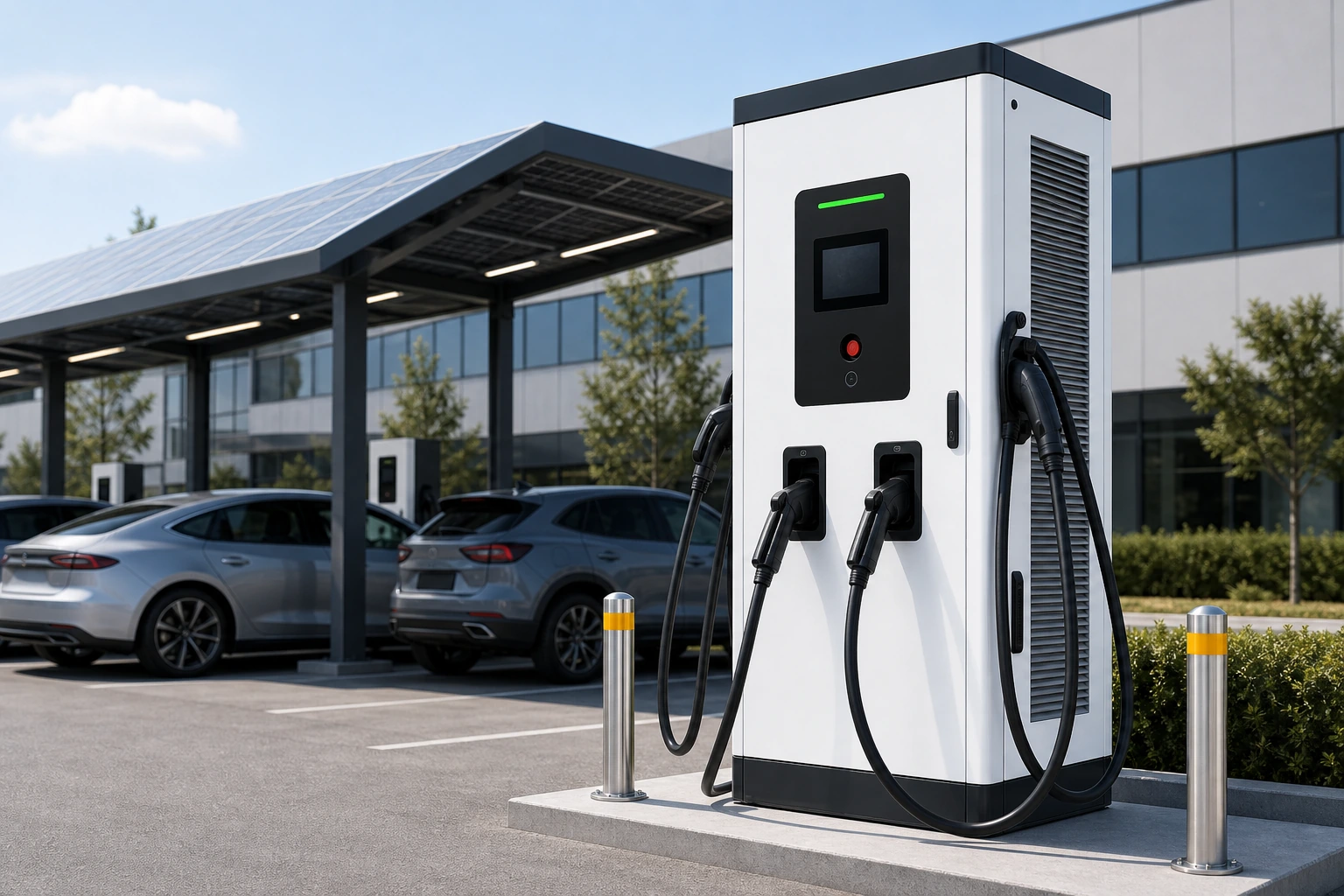
A useful comparison starts with vehicles, arrival patterns and available site power—not with the headline output alone.
Provide the vehicle voltage range, expected energy per session, arrival window, dwell time and daily session count.
State whether two vehicles must charge at the same time and request the permitted per-connector output and sharing rule in writing.
Confirm grid voltage, transformer capacity, protection, grounding, cable distance, service clearance and ambient conditions.
The following values describe the available reference record used for this review. The signed quotation and model documents must confirm the configuration supplied to your market.
| Item | Reference value | What to confirm for the order |
|---|---|---|
| Rated cabinet output | 120kW reference record | State total cabinet output and any per-connector limit. |
| Mechanical format | Integrated, floor-standing cabinet | Confirm dimensions, access clearances, mounting and cable routing in the model drawing. |
| Connector positions | Two | Select connector standards and cable arrangement for the destination and vehicle mix. |
| AC input reference | 380V, 50Hz | Match the actual grid, allowable tolerance, protection and upstream capacity. |
| DC output reference | 200–750V | Confirm the supplied model range against the vehicles and charging curve. |
| Enclosure reference | IP54 | Confirm the exact model marking and whether the site environment requires additional protection. |
| Display reference | 7-inch display | Confirm interface language, access method and project software scope. |
| Communication, payment and documents | Project-specific | List every required protocol, backend, payment flow, report and destination-market document in the RFQ. |
The cabinet rating and the connector count answer different questions. Ask the quotation to define operation when one vehicle connects, when two vehicles overlap, and when either vehicle reduces its requested power.
Request the total cabinet output, maximum output for each connector and any conditions that reduce either value.
Ask how power is allocated when a second vehicle arrives, one session ends or vehicle demand changes.
Provide vehicle voltage, inlet standard and charging-curve information instead of relying only on nominal charger power.
Define the data, test records and operating scenarios needed for pre-shipment and site acceptance.
Not from the cabinet rating alone. The quotation must state total output, the maximum for each connector and the simultaneous power-sharing rule for the selected configuration.
Connector standards are selected for the destination market and vehicle mix. Include the required connector combination in the RFQ and confirm it in the model-specific quotation and drawings.
Do not assume either function. Specify the backend protocol, required operations, authentication, payment flow and acceptance test so the supplier can confirm the supported scope in writing.
Request the exact model datasheet, nameplate information, electrical and installation drawings, connector and power-sharing description, test plan, packing information and any destination-market documents required for your project.
A usable quotation requires the destination, quantity, grid input, connector mix, simultaneous-use requirement, communication and payment scope, documentation needs and delivery terms. Price, availability and lead time must be confirmed for that scope.
Send enough project information for the quotation to identify the product configuration and its operating limits.