60kW DC fast charger
SF-ED-60KW
Cabinet: 860 × 400 × 1650mm (W × D × H).
Start here when a smaller cabinet and 60kW output fit the vehicle's charging window. Check available site power and cable reach before choosing the connector configuration.
Commercial Level 3 DCFC solutions for fleet depots, highway stations, parking operators, importers and charging network builders. Compare 60kW, 120kW, 150kW, 180kW and high-power DC charger options before RFQ.
This is a B2B product range for quotation and project selection. Final scope depends on power level, connector plan, backend, payment hardware, certification, quantity and delivery term.
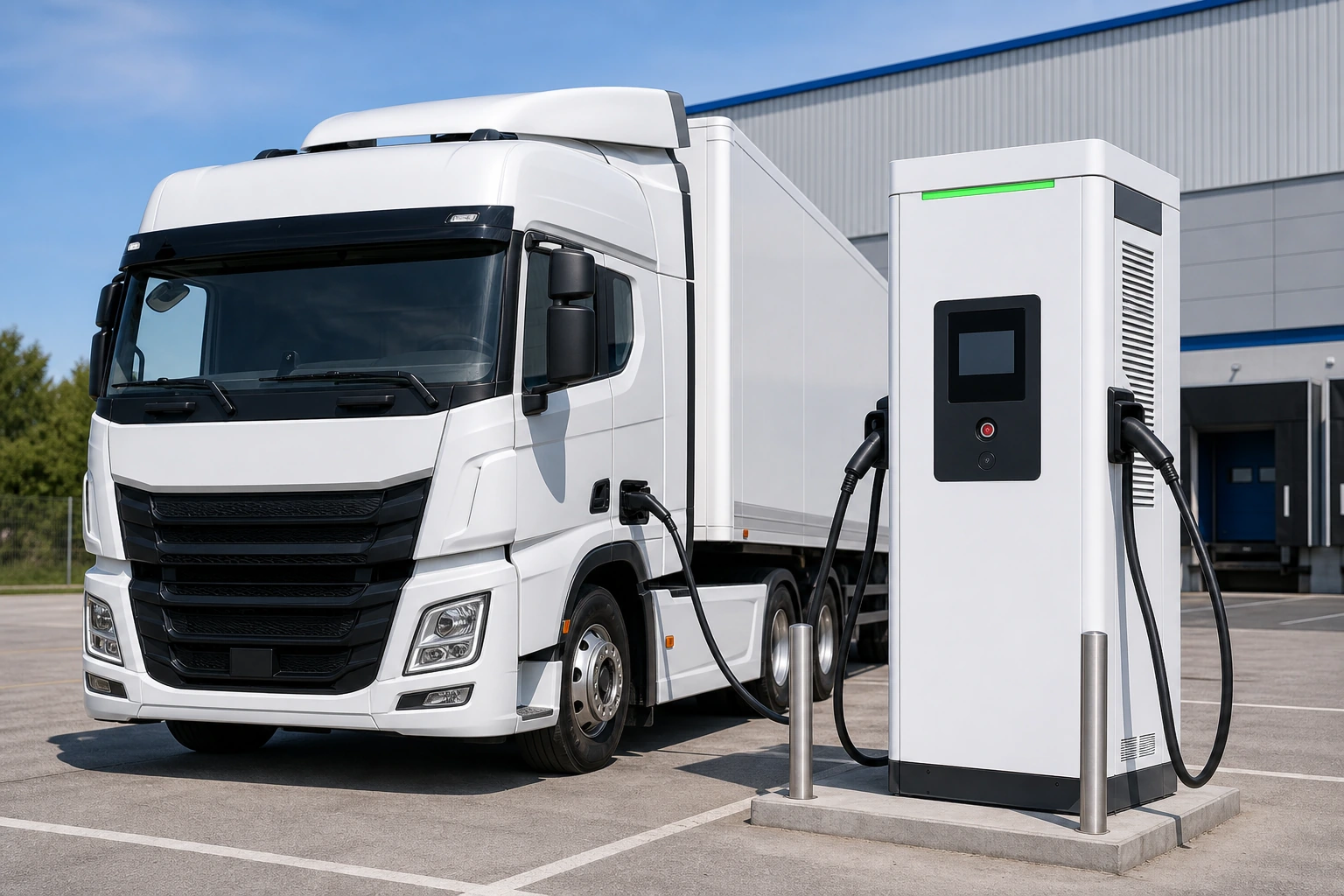
Compare 60kW, 120kW and 180kW SF-ED configurations by vehicle needs, cabinet dimensions and available site power.
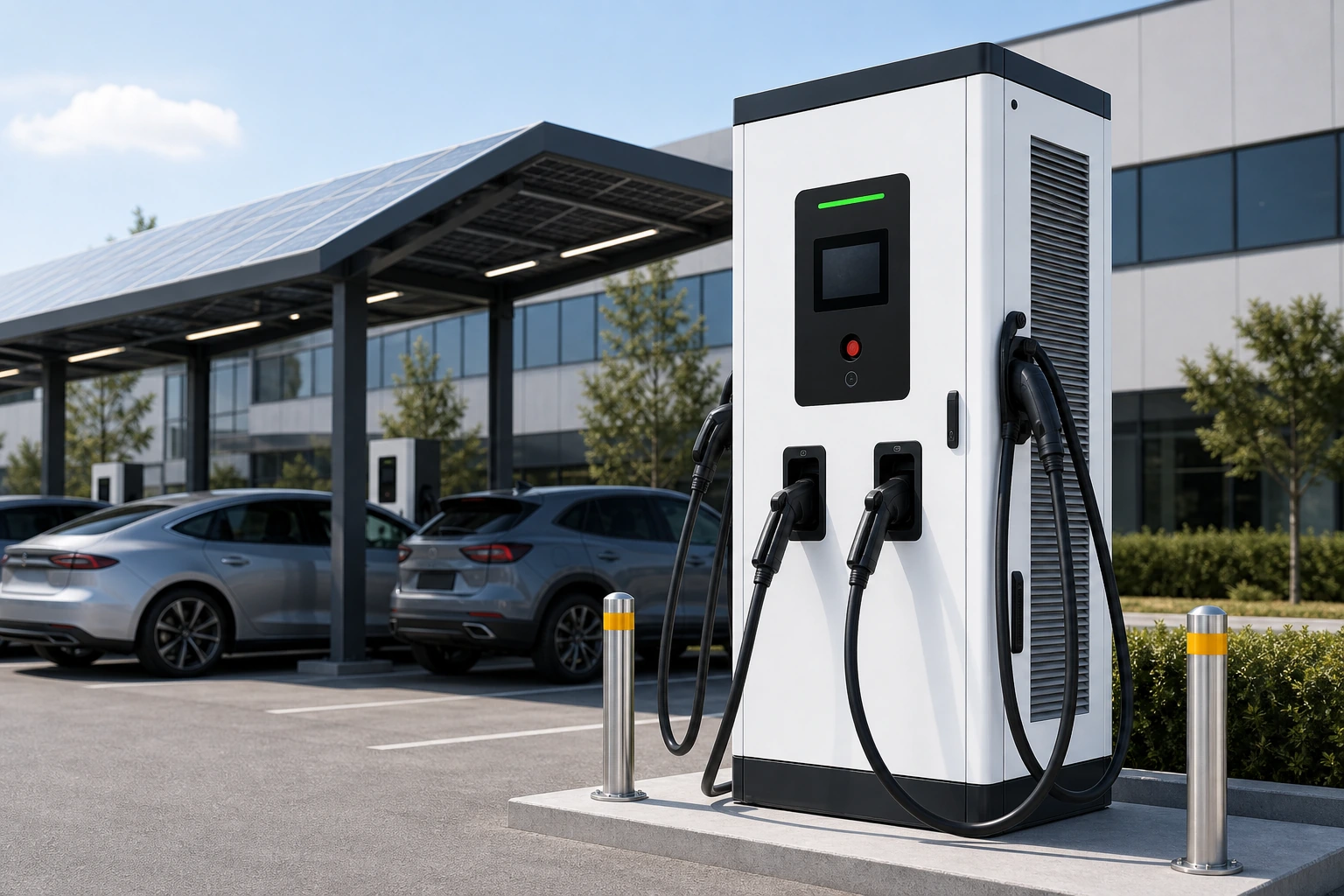
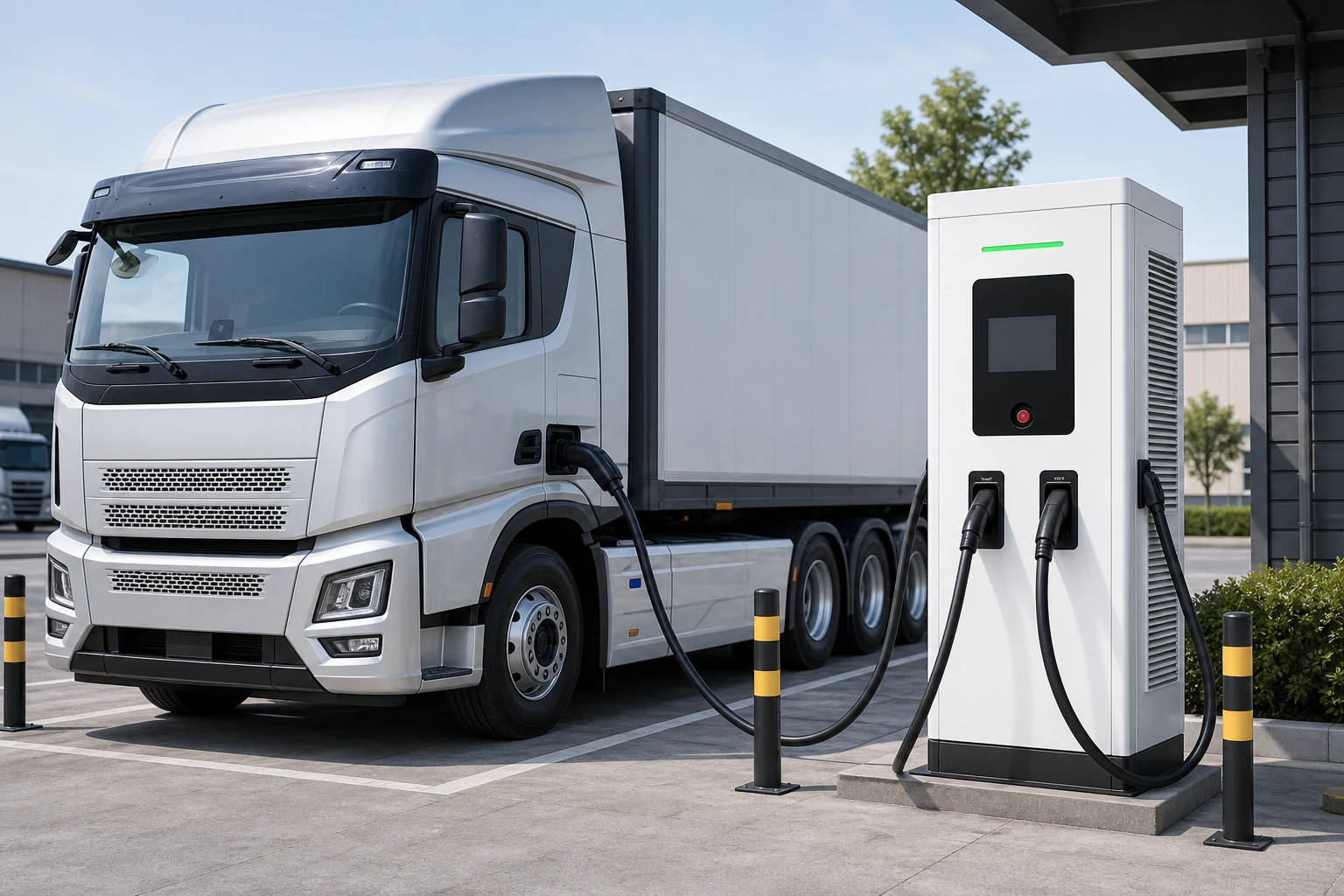
SF-ED-60KW uses the smaller listed cabinet, with RFID access and a 7-inch touch screen.
Review SF-ED-120KW for shared charging projects, with connector allocation and simultaneous output agreed for your vehicles.
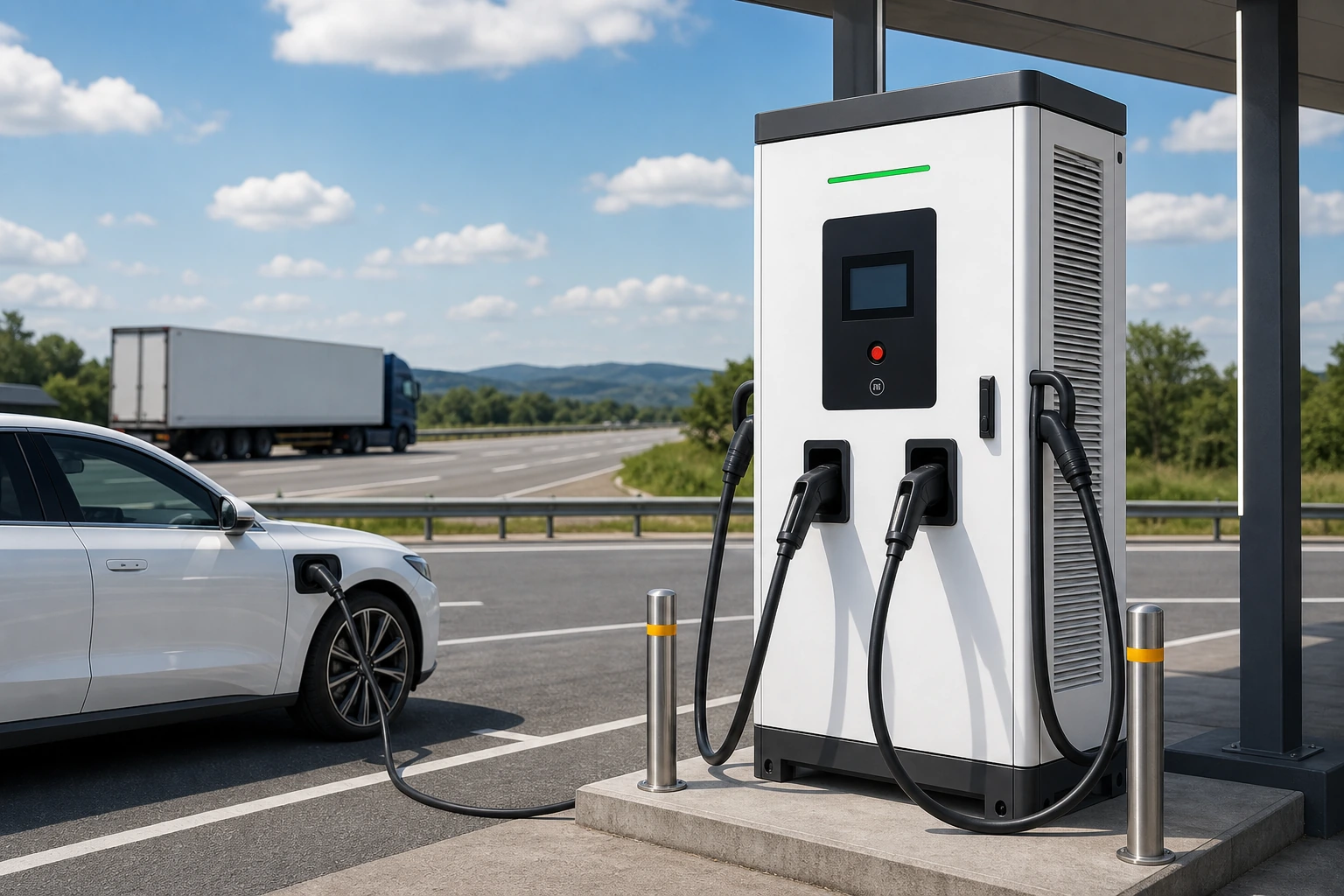
Compare SF-ED-180KW against vehicle acceptance, site capacity, airflow and maintenance space before selecting the configuration.

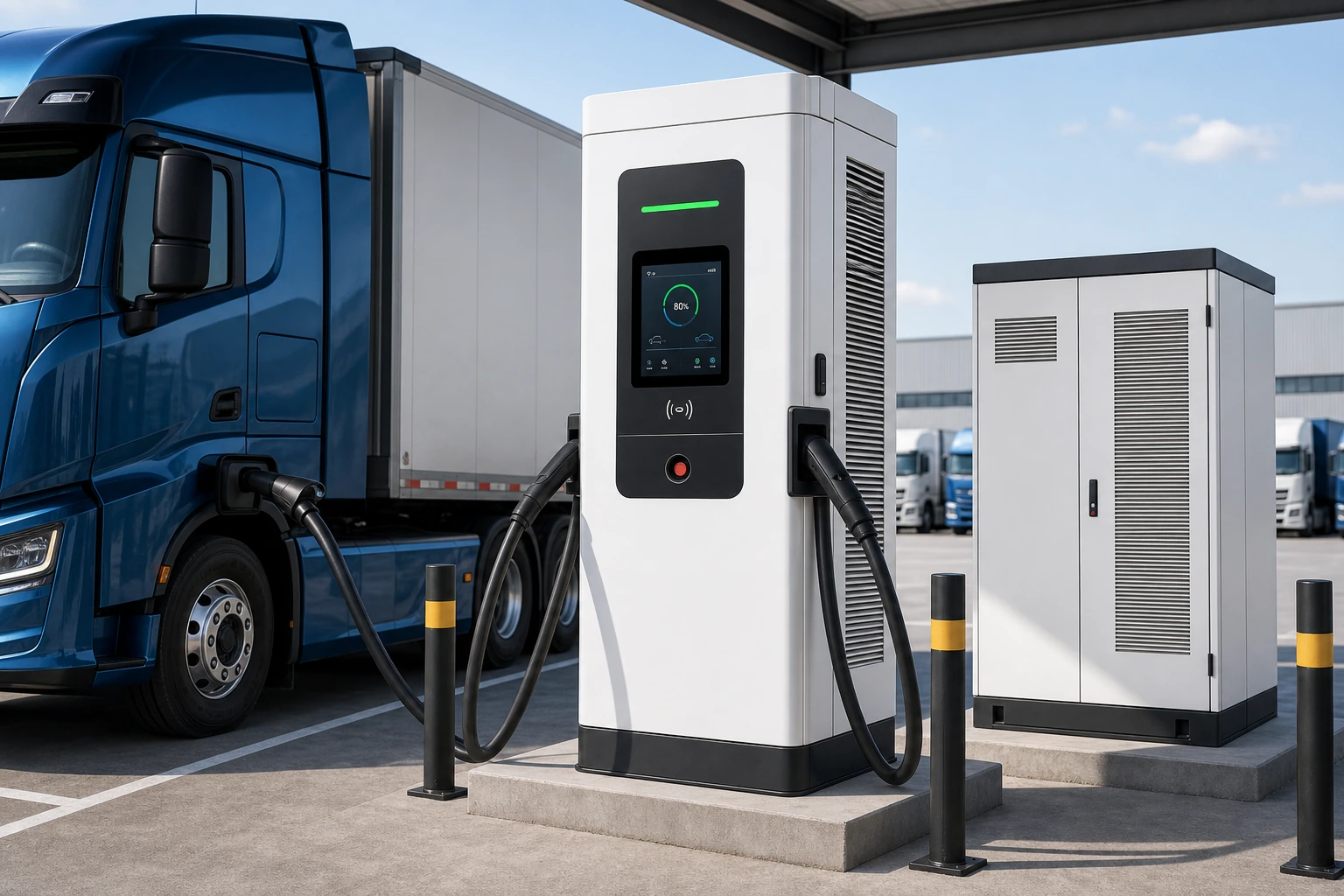
Our team will match a practical DC fast charger range and confirm certificate scope before quotation.
Use this table to narrow the first quotation request. SUNFULL can then confirm the power-module plan, connector mix, OCPP/payment scope, installation documents and delivery boundary for the selected application.
SF-ED-60KW
Cabinet: 860 × 400 × 1650mm (W × D × H).
Start here when a smaller cabinet and 60kW output fit the vehicle's charging window. Check available site power and cable reach before choosing the connector configuration.
SF-ED-120KW
Cabinet: 860 × 550 × 1760mm (W × D × H).
Compare this model when vehicle demand and available power call for 120kW. For dual-connector operation, agree how total output is shared; do not assume 120kW at each connector simultaneously.
SF-ED-180KW
Cabinet: 860 × 550 × 1760mm (W × D × H).
Consider 180kW where vehicle charge acceptance and site capacity support the higher output. Review the operating charge curve, airflow and maintenance access, not just the peak rating.
Cabinet dimensions are not the complete installation clearance. The model pages include the SF-ED technical data; confirm the final configuration, foundation and service space for your site.
| Project type | Typical power range | Key selection questions | Useful next page |
|---|---|---|---|
| Fleet depot | 60kW / 120kW / 180kW | Vehicle count, overnight dwell time, daily mileage, load management, OCPP backend. | Fleet OCPP charger |
| Highway charging | 150kW / 180kW / 240kW+ | Expected session time, peak traffic, transformer capacity, canopy and cooling plan. | 180kW highway charger |
| 150kW charging station | 150kW dual-gun DCFC | CCS2 or mixed connector plan, single-gun peak output, dual-gun sharing, IP rating, display language and OCPP/CSMS connection. | 150kW DC fast charger |
| Public parking or retail site | 40kW / 60kW / 120kW | Parking duration, payment system, screen language, RFID, app and local maintenance needs. | Commercial DC charger |
| Importer or distributor catalog | 60kW to 320kW | Destination certification, plug standard, branding, spare parts, manuals and sample order scope. | Wholesale DC charger inquiry |
For commercial procurement, Level 3 charger and DCFC usually point to the DC fast charger category. Confirm output power, connector standard, OCPP backend, payment flow and local grid capacity before comparing quotes.
Use for smaller parking, dealership or first DC charger projects. Compare the 30kW single-connector model with compact wall-mount options after checking grid input and vehicle dwell time.
Use for city parking, taxi top-up and smaller fleet depots with limited grid capacity. Review the 60kW CCS2 DC fast charger and confirm whether a 40-80kW cabinet configuration is available for the project.
Use when one site needs balanced turnover, dual connectors, public access, OCPP backend and stronger daily session volume. Review the 150kW highway model when that output fits the load study.
Cost depends on charger power, connector count, payment terminal, cabinet design, civil work, transformer capacity, software, certification and freight. SUNFULL can quote charger supply; local installation and grid work should be priced locally.
Use when dwell time is short, battery size is larger or the site requires high turnover. Review the 240kW split DC and 360kW HPC pages, then confirm vehicle acceptance limits and site capacity.
| Project need | Best page to continue | What to send before price |
|---|---|---|
| Floor-mounted charging stations | Commercial DC charger | Outdoor cabinet position, parking bay layout, cable reach, payment method and local service access. |
| 60kW / 120kW / 150kW DC fast charger | Power selection guide | Vehicle mix, expected dwell time, transformer capacity, connector standard and target session volume. |
| Commercial DC fast charger supply | Commercial fleet and charging-site planning | Site type, charger quantity, AC/DC mix, OCPP or payment requirement, certification country and delivery term. |
| Highway DC charging station | 150kW DC fast charger | Traffic level, target charge time, CCS2/CCS1/GB/T mix, canopy layout, uptime target and expansion plan. |
Comparing DC charging for a parking site? Review the 40kW urban dual-CCS2 charger and the 80kW parking dual-gun charger alongside your vehicle mix, dwell time and available supply. For an open-access site, also review the public EV charging planning guide before defining the operating and payment requirements.
Send site power, charger output, connector standard, OCPP/CSMS, payment hardware, country, quantity and delivery timeline. We will recommend the right DC charger platform instead of quoting a generic cabinet.
Not sure about the power yet? Start with your country, vehicle type, intended site and approximate quantity. Add the site information you already have.
For a useful quote, include grid voltage, connector mix, OCPP platform, payment workflow, target market, quantity, delivery term and any tender or site layout file.
A DC fast charger, also called a Level 3 charger or DCFC, converts grid AC power into DC power inside the charging station and sends it directly to an EV battery. For B2B projects, SUNFULL supplies 60kW, 120kW, 150kW, 180kW, 240kW and higher-power DC fast charging stations with CCS2, CHAdeMO or GB/T connector options, OCPP backend support and project-based quotation.
DC charger projects need a configuration review across power modules, connectors, grid capacity, thermal design, payment system, OCPP backend and import documentation. Compare power levels against vehicle dwell time, daily demand and the site's electrical capacity.
Define whether the charger is for a fleet depot, public parking site, highway station, bus depot, importer catalog or OEM/private label program.
Compare compact 20-40kW DC chargers, 60-180kW commercial stations, 150kW highway charging stations and 240-360kW high-power options by duty cycle and site capacity.
Confirm CCS1, CCS2, CHAdeMO or GB/T, cable length, OCPP backend, payment terminal, remote diagnostics and load management needs.
Request model-specific CE/IEC files and identify any destination-market or site-system requirements separately. NRS 097 or AFIR-related questions apply only where the project scope makes them relevant. Qualified project buyers can receive applicable files privately after the exact model and market are confirmed.
Charger output is only one part of a DC project. Share the incoming voltage, transformer or service capacity, existing peak load, number of charging bays, vehicle arrival pattern, expected sessions, target dwell time and expansion plan. The engineer can then compare installed charger power with the site's simultaneous demand and operating schedule.
Also define who supplies transformer, switchgear, protection, cabling, foundation, drainage, canopy, networking, payment services and local installation. A comparable quotation should separate charger supply from local civil and grid work instead of hiding both inside a headline station price.
Match CCS2, CCS1, CHAdeMO or GB/T to the actual vehicle mix and destination; define single, dual or mixed connector use.
Compare battery voltage, maximum DC power and charge curve. A higher cabinet rating does not guarantee every vehicle will accept that power.
Review module size, redundancy, allocation across connectors, service access and how partial module faults affect station availability.
Define total cabinet power, per-connector maximum, simultaneous-session allocation and operator priorities for dual- or multi-output systems.
Share ambient temperature, altitude, solar exposure, expected utilization and continuous high-load periods for thermal and derating review.
Confirm cable length, reach, routing, liquid- or air-cooled scope where applicable, connector holder and daily operator handling.
Review front/rear access, module replacement path, filters or cooling maintenance, spare parts and remote diagnostic workflow.
Plan bay count, transformer headroom, power cabinet or dispenser layout and backend capacity before fixing the first installation.
Confirm protocol version, backend owner, provisioning, transactions, meter values, remote commands, alarms, firmware and acceptance tests.
Define RFID, app, QR, plug-and-charge or operator-start flow, offline behavior and support process for failed authorizations.
Clarify POS, QR, app or backend payment, payment-service provider, receipt and settlement responsibility, local certification and fees.
Specify session pricing, parking or time fees, user groups, revenue reports, tax requirements and which system owns the tariff.
Share transformer limit, other site loads, charger priority, power-sharing rule and required response to meter or network loss.
Agree alarm notification, log collection, remote reset, firmware governance and the data required before dispatching a technician.
Define Ethernet, cellular or Wi-Fi route, SIM ownership, VPN or firewall boundary, signal conditions and local IT responsibility.
Confirm access to session and meter data, retention, export, privacy responsibilities and integration with fleet or operator systems.
Some drawings, test materials and compliance files are shared directly after the exact charger model, connector, backend, payment and destination scope are confirmed.
Output, voltage range, connector, module, cooling, enclosure, communication, payment and environmental options.
Request datasheetAvailable outline, clearance, foundation, cable-entry, interface and single-line information for the selected supply boundary.
Request drawingsProvide the CSMS and driver/payment workflow so the required OCPP, authorization and transaction checks can be agreed.
Request test reviewState the model, connector, destination and tender requirements for applicability confirmation.
Review document processSize from route energy, return windows, parked hours, vehicle priority, charger sharing, transformer limit and managed charging.
Fleet solutionReview peak traffic, target session time, vehicle power acceptance, connector mix, redundancy, cable cooling and expansion.
Highway solutionDefine bay turnover, authorization, payment, tariffs, reporting, signage, accessibility, uptime and local field-service process.
Commercial solutionStart with battery voltage, connector plan, dwell time, daily energy, cable handling, continuous utilization and site-power architecture.
Heavy-truck DC chargerAlign output, connector count, payment hardware, backend, cable, cooling, enclosure, documents, accessories and delivery term.
Include transformer, switchgear, protection, cabling, trenching, foundation, canopy, networking, permitting and local installation.
Model demand charges, energy price, backend and payment fees, connectivity, inspections, cleaning, filters, spares and field service.
Use realistic sessions, occupancy, charge curve, tariff, downtime and ramp-up rather than multiplying nameplate kW by every hour.
Request packed dimensions and gross weights for the chosen cabinet and accessories. Share the delivery address, site access and unloading arrangements so the freight quote and site preparation cover the same scope. Cabinet dimensions alone are not shipping dimensions.
Agree the charger models, connector versions, accessories and packing list for each shipment. Link the delivery sequence to site readiness, and retain the configuration and serial references at handover. Quantities, logistics responsibilities and dispatch timing are agreed in the quotation.
For technical assistance, share the model and serial reference, fault-screen photos, relevant logs and the steps leading to the issue. Include network details for connected functions. Electrical inspection and installation work should be handled by qualified local personnel; spare parts must match the selected configuration.
Send vehicle list, dwell time, daily energy, sessions, bay count, transformer and site load, simultaneous-use plan and expansion route.
Define total and per-output power, connector mix, cable, voltage range, power sharing, thermal conditions, enclosure and service-access needs.
State OCPP/CSMS, authorization, payment, tariff, reporting, network, load management, alarms, remote service and acceptance test.
List datasheet, drawings, installation information, test scope, certificate evidence, label/manual and tender documents needed for the selected model and market.
A clear inquiry helps avoid wrong connector, wrong grid input, missing certificates or a backend mismatch after import.
Country, grid voltage, language, plug standard, local regulation and any import document request.
Vehicle model mix, expected charging time, number of bays, indoor or outdoor placement and IP rating needs.
OCPP version, existing backend, RFID, POS/payment terminal, app integration and remote maintenance workflow.
Quantity, OEM branding, packaging, spare parts, delivery term, installation support and after-sales plan.
Confirm whether the site will stay at 60-180kW or later expand to 240kW, 320kW or split HPC charging, so cabinet, cable and backend choices do not block future upgrades.
Ask suppliers to quote the same connector count, cable length, payment hardware, OCPP scope, certificate package, spare parts and freight term before comparing price.
Use these guides to resolve power, connector, protocol, payment, cost and compliance questions before contacting SUNFULL.
Understand EVSE meaning, EV charger terminology and how AC/DC equipment choices affect commercial sourcing.
Compare AC and DC charger fit by parking time, site turnover, grid capacity, connector standard and software scope.
Power selection guidance for depots, parking sites and first commercial DC charging projects.
Compare throughput, grid demand and project fit for highway and high-traffic locations.
Connector planning guide for importers and mixed-market charging projects.
Backend and protocol considerations for commercial charging networks.
Verify CSMS connection, meter values, alarms, remote reset and RFID/payment workflow before batch shipment.
Separate vehicle-to-charger communication from OCPP/CSMS backend scope before specifying DC fast chargers.
Plan CPO platform, depot scheduling, RFID access, billing and load management around OCPP DC charger hardware.
Compare access control, ad hoc payment and commercial settlement scope before ordering paid DC stations.
Map charger uptime, tariff rules, user accounts and revenue reports to the CSMS operation model.
Understand which configuration choices affect quotation without treating the page as online checkout.
Understand the equipment, connector, payment, software, document, freight and site inputs required for a comparable project quotation.
Prepare transformer, protection, cable route, foundation, drainage, network and service-clearance information before model approval.
Check CE, IEC, OCPP, NRS 097 and importer document questions before shortlisting suppliers.
A DC fast charger manufacturer should receive the site power, vehicle use, required output, connector plan, OCPP or CSMS platform, payment workflow, destination market and quantity before recommending a cabinet. The useful comparison is the complete power-module, connector, thermal, backend and document scope—not the headline power alone; compliance evidence must be confirmed per model/project.
Fleet depot, public parking, highway, bus, importer catalog or private-label program.
Match output class to vehicle dwell time, daily demand, concurrent sessions and available electrical capacity.
Confirm connector standard, cable needs, OCPP backend, payment hardware, remote diagnostics and load management.
State quantity, delivery term, tender inputs and which documents or local approvals are required; confirm per model/project.
Send vehicle type and dwell time, daily charging energy, site voltage and available capacity, target power, connector mix, OCPP/CSMS, payment, destination, quantity and required files. SUNFULL will return the platform and open engineering questions for quotation.
You can start with the country, vehicle type and quantity, even if the power or connector choice is not final. Tell us what you are planning and which details you need help confirming.
Request Quote WhatsApp DC Charger RequirementsUse these pages together to define protocol version, backend, authentication, payment, load management and acceptance testing before ordering chargers.
Compare OCPP 1.6J, OCPP 2.0.1, cloud operation and integration scope.
Choose protocol scope by backend functions and lifecycle requirements.
Verify connection, meter values, remote commands, alarms and firmware.
Plan charging windows, transformer capacity, priority and managed load.
Match vehicles, dwell time and daily energy to charger power and quantity.
Define authorization, tariff and settlement workflows before integration.
An EV DC fast charger quotation should connect vehicle voltage, connector, daily energy, peak arrival pattern, dwell time, power sharing, climate, payment and backend requirements. Buyers comparing DC fast charger manufacturers should ask each supplier to quote the same hardware, software, document, commissioning and spare-parts boundary.
List vehicle classes, battery voltage window, connector mix, target energy per session, sessions per day and the busiest operating period.
Provide available grid capacity, transformer boundary, cable distance, proposed bays, ambient conditions and any staged expansion plan.
Define factory and site checks, CSMS workflow, alarms, service access, logs, model-matched spares and the documents needed by local project parties.