Short answer
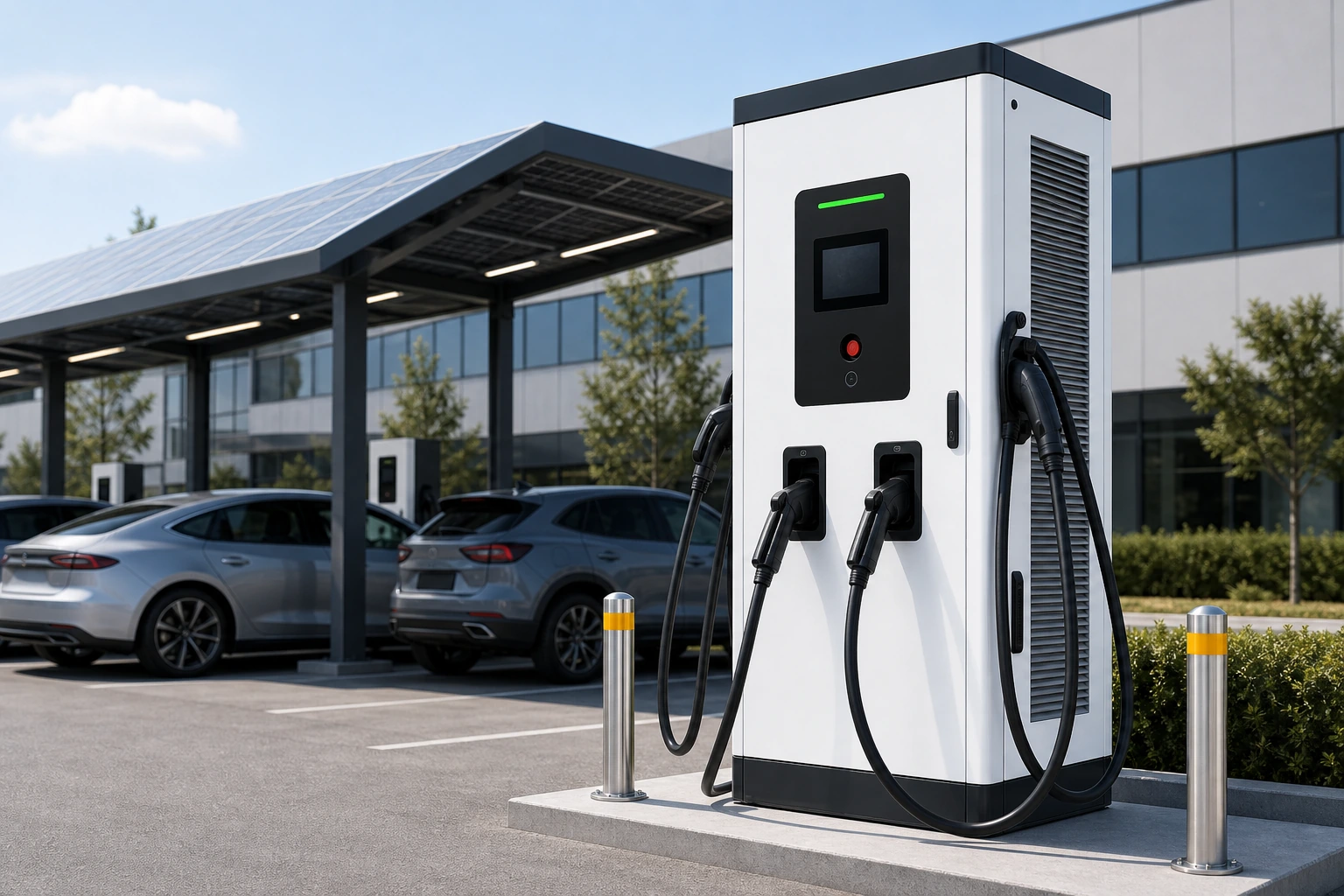
Choose 60kW when the site has limited grid power or longer dwell time, 120kW to 180kW when mixed fleet and public users need balanced speed, and 240kW to 320kW when turnover, highway use, heavy-duty vehicles or future battery size matters. The right choice depends more on dwell time, connector mix, OCPP backend needs and grid capacity than on charger power alone.
Start with the site, not the charger
Many buyers start by asking for a fixed charger size. A better first question is how long vehicles will stay on site. A fleet depot, a shopping mall and a highway service area can all use DC charging, but their operating logic is different.
- Fleet depot: predictable charging windows, controlled vehicle group, easier load management.
- Commercial parking: mixed users, longer dwell time, payment and uptime visibility matter.
- Highway station: short dwell time, high peak load, stronger need for 150kW or higher.
If the buyer is asking about Level 3 charger cost, clarify the power class first. A 60kW city charger, a 150kW highway charger and a 320kW heavy-duty charger are all DC fast chargers, but their grid work, cabinet design, connector plan and commercial payback assumptions are different.
Power selection table
| Power level | Best fit | Buyer notes | Related SUNFULL page |
|---|---|---|---|
| 60kW | Taxi fleet, small parking, city charging | Good when grid capacity is limited and charging windows are not extremely short. | 60kW commercial DC charger |
| 120kW | Fleet depot, public parking, bus support | Balanced option for mixed use. Often chosen when one cabinet needs two connectors. | 120kW dual DC charger |
| 150kW | Highway, larger depot, high-turnover hub | Better when vehicle dwell time is short or the operator wants stronger future readiness. | 150kW highway DC charger |
| 180kW | Public charging hub, bus depot, fleet expansion | Useful when a 120kW site needs more peak output but a 240kW grid upgrade is not yet practical. | 180kW highway DC charger |
| 240kW | Highway corridor, destination hub, mixed fleet | Often selected for higher session turnover, larger batteries and future 800V vehicle support. | 240kW split DC charger |
| 320kW | Heavy truck, bus, large hub, premium public charging | Best justified by high utilization, short dwell time, stronger grid capacity or BESS buffering. | 320kW heavy truck charger |
Connector, OCPP and certification checks
Power level is only one part of a charger specification. For an import project, the charger also needs to match the vehicle connector standard, backend software, installation environment and local document requirements.
| Item | What to confirm | Why it matters |
|---|---|---|
| Connectors | CCS2, CHAdeMO, GB/T or mixed output | Connector choice affects target vehicles, cable stock, spare parts and service training. |
| OCPP | OCPP 1.6J or OCPP 2.0.1 with backend test plan | Commercial operators need remote monitoring, billing, authorization and firmware support. |
| Certification | CE LVD/EMC, IEC 61851, IEC 62196 or market-specific documents | Importers should check whether certificates cover the requested model, voltage and configuration. |
| Site protection | IP rating, surge protection, emergency stop and thermal design | Outdoor charging stations need stable operation in rain, dust, heat and high-use periods. |
Power selection and cost intent
Ads search terms around Level 3 charger cost and commercial EV charging station cost usually need a sizing answer before a price answer. Use this table to route buyers to the right next step.
| Buyer intent | Power direction | Conversion path |
|---|---|---|
| Low-cost city or parking DC charging | 60kW to 80kW when dwell time is longer and grid capacity is limited. | Review cost factors |
| Commercial parking or fleet depot | 120kW to 180kW when uptime, payment and charger sharing matter. | Request commercial charger quote |
| Level 3 highway or petrol-station site | 150kW or higher when vehicle turnover and shorter dwell time matter. | View 150kW DC charger |
| High-utilization or heavy-duty charging | 240kW to 320kW+ when the grid, vehicle type and business model justify higher power. | View high-power DC charger |
Questions buyers should answer before RFQ
- How many vehicles need charging per day?
- What is the expected charging window per vehicle?
- Which connector types are required: CCS2, CHAdeMO, GB/T or mixed?
- Is the site prepared for 3-phase electrical work and transformer upgrade?
- Will the charger connect to an OCPP backend or operate locally?
- Does the project require CE, IEC, NRS 097 or country-specific import documents?
When 60kW is the practical choice
A 60kW charger can be the right decision for commercial buyers who need DC charging but cannot justify a large grid upgrade. It is useful for city fleets, taxi top-up sites, service garages and parking areas where users can wait longer.
The risk is under-sizing. If the site later becomes a public fast-charging hub, user turnover may be too slow. In that case, specify cabinet layout, cabling and transformer headroom so future upgrade is possible.
When 120kW or 150kW makes more sense
120kW is often the practical middle ground for B2B projects. It can serve two vehicles at lower shared output or one vehicle at stronger output, depending on cabinet design. 150kW becomes more attractive when the buyer targets highway corridors, larger EV batteries, higher daily session count or premium public charging service.
When 240kW or 320kW is worth the grid work
Higher power is useful when the site revenue model depends on fast turnover. A 240kW or 320kW charger can support highway service areas, logistics depots, bus depots and larger public hubs, but the business case should include transformer capacity, cable routing, heat dissipation, backend load control and service access.
If the grid upgrade is expensive, ask whether a BESS-supported charging design can reduce peak demand. For solar storage or night-tariff projects, the charger, BESS and EMS should be specified together rather than priced as isolated hardware.
Procurement tip
Ask for a one-page power allocation diagram. It should show cabinet power, gun output, connector standard, OCPP version, cable length, protection rating, cooling method and required input voltage. This prevents price quotes that look similar but are not technically equivalent.
FAQ
Is 60kW enough for commercial EV charging?
60kW is usually suitable for parking lots, taxi top-up, small fleet depots and sites with limited grid capacity. It is less suitable for highway stations where short dwell time is critical.
When should a buyer choose 150kW?
150kW is a strong middle option for highway service areas, public charging hubs, bus depots and fleet sites that need faster turnover without moving directly to high-power charging.
When is 240kW or 320kW justified?
240kW or 320kW is usually justified when the site needs short dwell time, high daily session count, larger battery vehicles, heavy-duty charging or a highway hub upgrade path.
How does power selection affect Level 3 charging station cost?
Higher power usually increases charger hardware cost, electrical work, cooling requirements, grid capacity and installation planning. Buyers should match power to dwell time and utilization instead of choosing the largest charger by default.
Buyer FAQ
DC fast charger power questions before sizing the RFQ
Short answer: Do not choose the largest DC charger by default. Match 60kW, 120kW, 150kW, 240kW or 320kW to dwell time, vehicle battery size, daily sessions, grid capacity and future expansion.
What information is needed for a useful DC charger power recommendation?
Send vehicle type, daily session target, charging window, connector mix, available transformer capacity, payment/OCPP needs, country and rollout quantity.
When is 150kW a safer starting point than 60kW?
Choose 150kW when the site needs shorter dwell time, highway-style operation, larger batteries or a stronger upgrade path than city parking or taxi top-up.
When should 240kW or 320kW be considered?
Consider 240kW or 320kW when high utilization, heavy-duty vehicles, short turnaround time or premium public charging revenue justifies the grid work.
Internal links for further evaluation
Turn this power guide into a charger sizing RFQ
For a useful sizing answer, share vehicle count, charging window, expected daily sessions, connector mix, available transformer capacity, payment model and target country. SUNFULL can then recommend whether 60kW, 120kW, 150kW, 240kW or a higher-power DC charger is the safer starting point.
Get DC Fast Charger Datasheets Check 150kW DC Charger WhatsApp Charger Power / Quantity
Need a charger sizing recommendation?
Send the vehicle count, battery size, charging window, connector standard, site country, payment/OCPP needs and available grid capacity. SUNFULL can return a first sizing suggestion for commercial evaluation.