Short answer
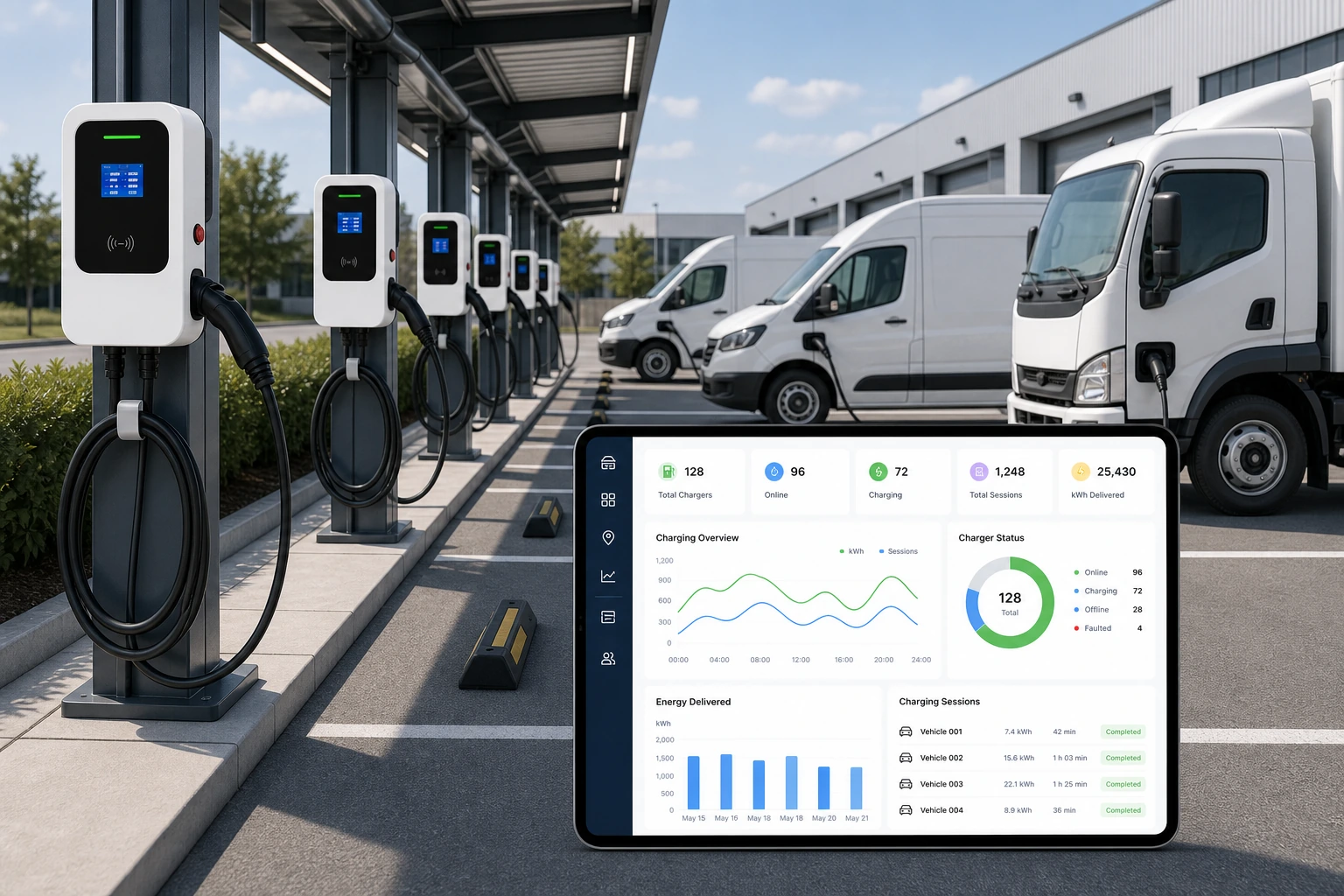
A CPO uses CSMS software and OCPP chargers to manage tariffs, users, charger status, payment records, revenue reports and maintenance actions. Good revenue management starts before hardware purchase: define the charging business model, payment method, tariff rules, reporting needs and backend integration before confirming charger specifications.
What a CPO needs to operate
A charge point operator does more than install chargers. The operator must keep chargers online, control who can charge, collect payment or account records, monitor utilization, manage faults and export business reports. This is why OCPP / CSMS planning should be part of the charger RFQ.
| Operating area | What the CPO manages | System requirement |
|---|---|---|
| Users | Drivers, fleet accounts, staff cards, visitors and blocked users. | Account rules, RFID/app access and authorization logs. |
| Tariffs | kWh price, time fee, idle fee, member price and site-specific rules. | CSMS tariff engine and clear price display workflow. |
| Revenue | Session records, payment status, refunds, settlement and exports. | Payment integration and report export. |
| Uptime | Online status, fault alarms, reset, maintenance and spare parts. | OCPP monitoring, remote reset and service process. |
| Expansion | More chargers, more sites and new vehicle groups. | Charger grouping, role control and multi-site dashboard. |
Common EV charging tariff models
The tariff model should match the site type, local regulation and business goal. A mall may prefer simple paid charging with visitor receipts; a fleet depot may prefer internal cost allocation; a highway station may need ad hoc payment and high uptime reporting.
| Tariff model | Best fit | What to verify |
|---|---|---|
| Per kWh | Public charging and commercial stations where energy metering is allowed. | Meter accuracy, local billing rules and report export. |
| Per minute | Markets where time-based charging is accepted or used with parking logic. | Session timing, idle behavior and local compliance. |
| Session fee | Simple visitor charging or early pilot projects. | Start/stop logic and receipt content. |
| Idle fee | High-demand parking and fast charging hubs. | Connector status, grace period and user notification. |
| Fleet account | Taxi, bus, logistics and workplace charging. | Driver ID, vehicle ID, cost center and monthly export. |
| Member price | CPO networks and subscription models. | User group rules and tariff priority. |
Revenue workflow from charger to report
- The user identifies by RFID, app, QR, POS or fleet account.
- The charger asks the CSMS for authorization through OCPP.
- The charging session starts and meter values are uploaded.
- The CSMS applies tariff rules and records the transaction.
- Payment or settlement is matched to the charging session.
- The operator exports revenue, energy, uptime and exception reports.
CPO software questions before buying chargers
| Question | Why it matters | Related page |
|---|---|---|
| Which OCPP version and backend are required? | Different platforms and tenders may require OCPP 1.6J or 2.0.1. | OCPP version guide |
| How will drivers start charging? | RFID, app, QR and POS workflows change hardware and software scope. | Payment guide |
| How will tariffs be shown and exported? | Pricing transparency and accounting depend on accurate session records. | CSMS guide |
| How fast must vehicles turn over? | Power level changes revenue capacity, grid impact and charger cost. | Power selection guide |
| What happens when a charger is offline? | Downtime directly affects revenue and user trust. | OCPP testing checklist |
KPIs CPOs should monitor
- Connector uptime and fault frequency.
- Sessions per charger per day.
- Energy dispensed by site, charger and connector.
- Revenue by charger, day and user group.
- Average session duration and idle time.
- Payment success rate and unpaid exception records.
- Utilization by power level, such as 60kW, 120kW, 150kW or 240kW.
Hardware choices that affect CPO revenue
Revenue management is not only software. Charger power, connector count, cable length, payment hardware, network method and service access all affect how a station performs after launch. A 150kW DC fast charger may fit high-turnover highway or public charging; lower power DC or AC chargers may fit longer parking time and lower grid pressure.
For mixed commercial sites, compare AC and DC charger roles before deciding the payment workflow. A parking site may combine AC chargers for long-stay users with DC fast chargers for short visits.
Procurement tip
Ask the supplier to confirm both hardware and operating workflow: charger power, connector type, OCPP version, CSMS platform, payment method, tariff rule, report export and remote support process.
FAQ
What does a CPO manage in EV charging?
A CPO manages charging stations, users, tariffs, payment workflow, uptime, maintenance, reports, revenue records and site operation.
How do CPOs set EV charging tariffs?
CPOs can set tariffs by kWh, session, time, idle fee, parking bundle, membership level, fleet account or site-specific rules depending on local regulation and business model.
Why does CPO revenue management need OCPP and CSMS?
OCPP sends charger status and transaction data to the backend, while CSMS turns that data into user records, tariff rules, payment status, reports and operational actions.
What should a CPO ask an EV charger supplier?
A CPO should ask about OCPP version, backend testing, payment workflow, RFID or app access, tariff support, report export, uptime support, spare parts and remote maintenance scope.
Official references
Buyer FAQ
CPO tariff and revenue questions before charger procurement
Short answer: CPO buyers should define tariff logic, user authorization, payment flow and report export before selecting charger hardware, because those decisions affect OCPP, RFID, QR/POS and CSMS scope.
What should a CPO confirm before asking for charger price?
Confirm site type, charger power, connector, user groups, tariff model, payment method, OCPP/CSMS provider, report export and remote maintenance process.
Why does tariff design affect hardware choice?
RFID, QR, POS and app payment may require different hardware, network setup, firmware configuration and backend testing before shipment.
What report should a CPO request from the backend?
Ask for transaction records, energy by charger, revenue by site, payment status, fault logs, uptime, idle time and user or fleet account export.
Related SUNFULL pages
Need a CPO-ready charging package?
Send your site type, target tariff model, payment workflow, charger power and backend platform. SUNFULL can help scope the charger, OCPP and CSMS requirements before quotation.
Plan OCPP / CSMS scope Request CPO charger quote WhatsApp tariff requirements