Short answer
EV charger maintenance should combine safe visual inspection, cleaning allowed by the product instructions, connector and cable checks, enclosure and cooling checks, alarm and session review, network verification, controlled functional tests, documented escalation and model-matched spare parts. The exact interval and task ownership depend on the selected equipment, site conditions, utilization and local rules.
EV charging station maintenance is an operating system, not a single checklist copied across every charger. AC wallboxes, integrated DC cabinets, split dispensers and mobile charging systems expose different service risks. The operator should keep an asset register and use the approved information for each model and configuration.
Start with an asset and responsibility register
Record site, charger identity, model, serial or batch reference, power and connector configuration, installation date, software and firmware state, CSMS identity, network method, warranty boundary, responsible technician, support contact and location of controlled documents. This prevents a fault report from beginning with an unidentified charger and an unrelated manual.
| Record | What to keep | Operational use |
|---|---|---|
| Configuration baseline | Model, connector, options, firmware, network, CSMS and approved settings. | Shows whether a later change may explain a fault. |
| Inspection history | Date, inspector, findings, photos, readings where approved and corrective action. | Reveals repeated damage or environmental patterns. |
| Alarm and session evidence | Time, charger ID, alarm code, state transition, user impact and recovery. | Connects physical checks to software behavior. |
| Parts movement | Part number, compatible model, quantity, storage, installation and return status. | Prevents incompatible substitutions and stock uncertainty. |
Use a safe external inspection before opening equipment
Check the parking area, impact protection, mounting, foundation or wall condition, enclosure, doors, seals visible without disassembly, vents, cable management, connectors, screens, labels, emergency controls, lighting and signs. Look for heat discoloration, water entry evidence, unusual noise, odor, loose mounting, sharp edges, damaged insulation, debris and blocked cooling paths.
If the charger shows damage, water entry, exposed conductors, repeated protective trips, overheating, arcing evidence or an unsafe connector, isolate the area and follow the approved local safety process. Internal electrical work must be performed only by qualified personnel following the correct model information and local requirements.
AC and DC charging equipment need different emphasis
| Equipment | Routine emphasis | Diagnostic inputs |
|---|---|---|
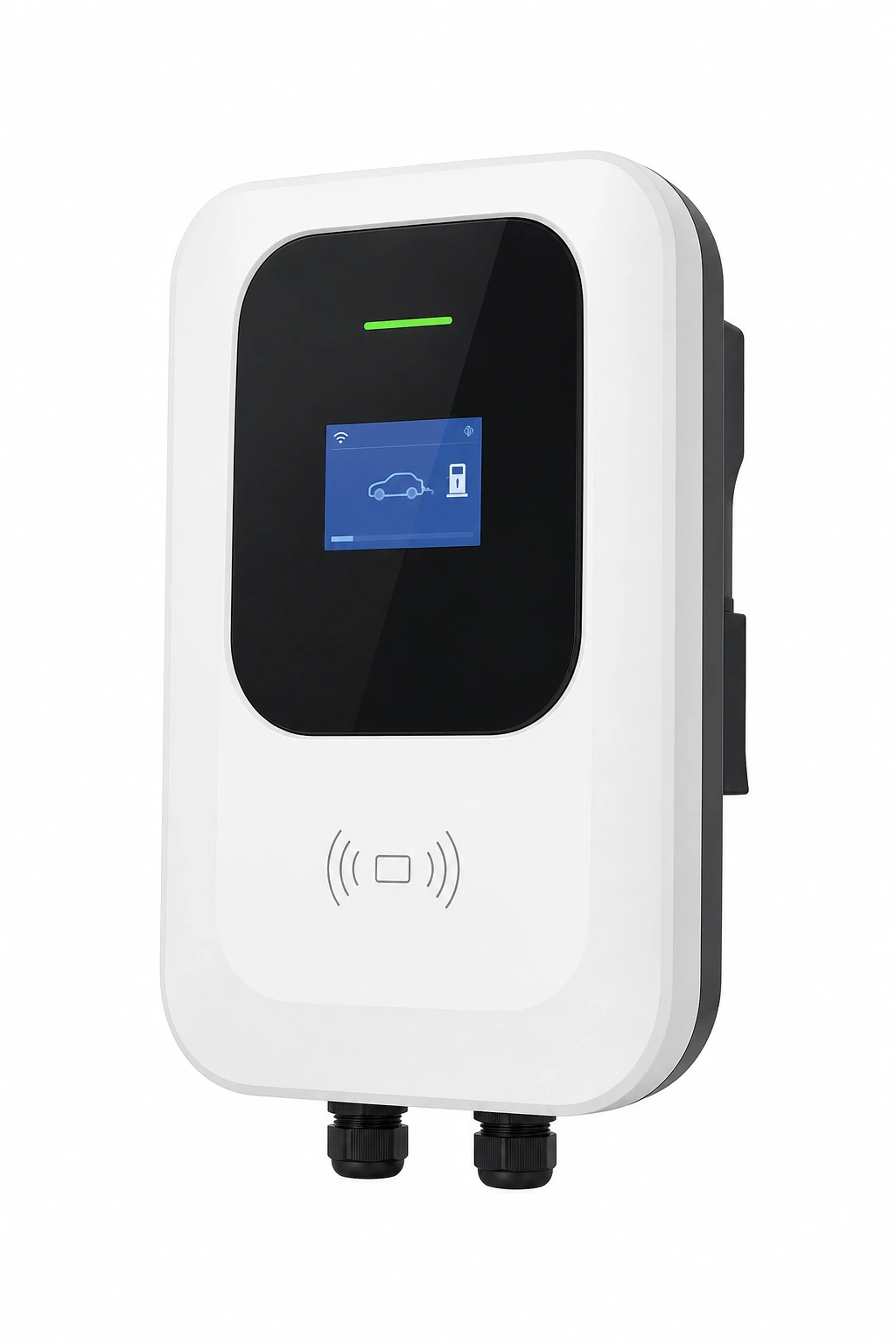
| AC wallbox | Mounting, socket or tethered cable, connector latch and pins, RFID or app access, indicator, enclosure and communication. | User report, session record, network state, vehicle compatibility and protective-device event recorded by qualified staff. |
| Integrated DC cabinet | Cable and connector wear, cooling path, filters where fitted, doors and seals, displays, payment peripherals and service clearances. | Alarm history, temperature and module information available to authorized service staff, session trace and CSMS events. |
| Split system | Power cabinet plus dispenser identity, interconnecting path, cable management, cooling and correct mapping between outlets and power modules. | Cabinet and dispenser IDs, allocation behavior, outlet-specific faults and communication topology. |
| Mobile system | Charging equipment plus storage state, transport hardware, cable storage, ventilation, parking and recharge workflow. | Mission energy, recharge history, transport events, BMS or charger alarms and operating environment. |
Review logs and OCPP events as part of diagnosis
A charger that appears physically normal can still fail authorization, transaction, meter-value, remote-command or payment workflows. Record the time, charger ID, connector, user method, vehicle, CSMS event and observed state. Compare this with network availability, recent configuration changes and the platform log. Avoid repeatedly resetting equipment without preserving evidence.
For intermittent faults, capture a complete sequence: idle, connection, authorization, charging start, meter values, stop reason, disconnect and return to available. Identify whether the failure belongs to the vehicle interface, charger, local network, CSMS, payment service or site power boundary before replacing parts.
Build a model-matched spare-parts plan
Spare parts should be selected by installed models and service consequence. A connector or cable may differ by standard, current, length, cooling method, lock, sensor and termination. Filters, fans, displays, RFID readers, communication devices, protection components and power modules can also be configuration-specific. Record supplier part references and compatible serial or revision ranges.
- Installed quantity and exact model or revision at each site.
- Parts with routine wear or environmental exposure.
- Failure consequence, local lead time and technician capability.
- Storage temperature, humidity, shelf-life information where applicable and packaging condition.
- Tools, firmware or calibration requirements for authorized replacement.
- Return, failure-analysis and warranty evidence requirements.
Do not publish or circulate controlled service instructions beyond authorized project parties. Contact SUNFULL with the model and support need to identify which current files and parts information can be shared privately.
Send a diagnostic package that can be acted on
A clear support request reduces back-and-forth. Include site and charger identity, model, serial or batch reference, connector, firmware and CSMS where known, time zone and occurrence time, exact user impact, alarm text or code, photos, logs, recent work, weather or power event, vehicle used and every check already completed. Remove personal user information that is not needed for diagnosis.
Never guess a replacement part from appearance alone
Two products may look similar while using different cable assemblies, boards, modules, communication options or firmware. Confirm the exact product identity and compatible part reference before shipment or installation.
Plan maintenance at procurement and handover
Before ordering, ask how equipment identity is recorded, which routine checks are expected, what logs are available, how remote support begins, which parts are model-specific and what information is needed for warranty review. At handover, assign inspection, cleaning, network, software, payment, user support, electrical service and escalation ownership. A site without assigned ownership becomes difficult to maintain even if documentation exists.
Official reference scope
This public source supports general operation and maintenance planning. It does not certify SUNFULL or prescribe the interval for a specific model.
Related product and planning pages
Buyer FAQ
How often should charging equipment be inspected?+
The interval must follow the selected product information, site risk assessment, utilization, climate, local rules and operator maintenance plan. Increase checks when the site has heavy use, dust, salt, heat, impact exposure, repeated connector damage or unresolved alarms.
Which spare parts should a charging operator stock?+
Build the list from the exact model, configuration, installed quantity, local lead time, failure consequences and service capability. Do not buy a generic kit solely by charger power; connectors, cables, filters, control parts and protection components can be model-specific.
What should be sent to SUNFULL when reporting a fault?+
Send the model, serial or batch reference, site and charger identity, configuration, clear photos, time-stamped symptoms, alarm codes, relevant logs, recent changes, network status and the checks already completed by qualified personnel.
Can technical and test files be provided publicly?+
Available model-specific manuals, drawings, test or compliance information can be reviewed with qualified project buyers after the exact model, configuration, destination and support need are confirmed. Some controlled files are shared privately.
Request model-matched maintenance information
Send the exact model, serial or batch reference, site, configuration and support need. Available manuals, parts information and controlled technical files are reviewed for the confirmed equipment.