Short answer
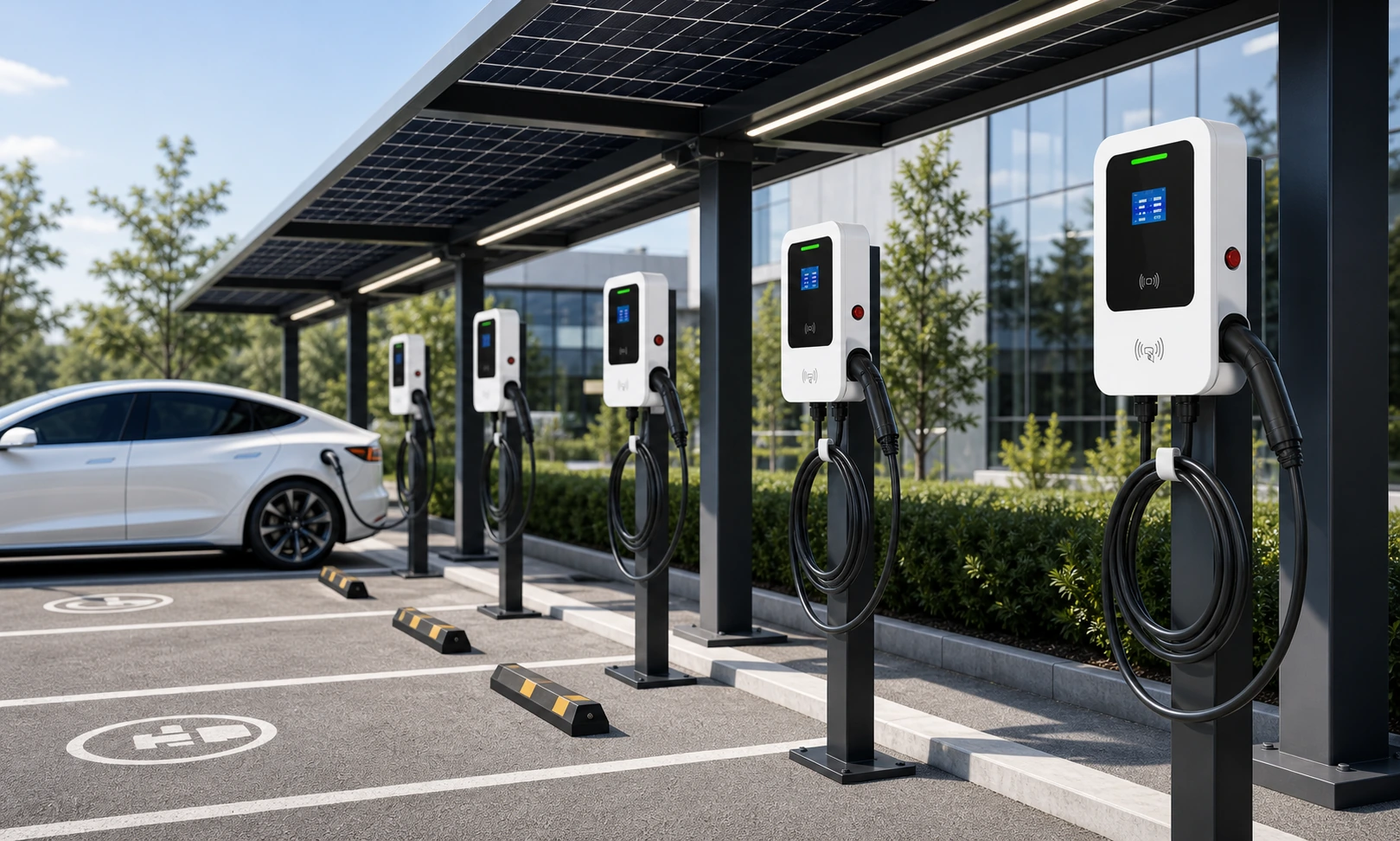
Commercial EV charger installation planning starts before equipment is ordered. Freeze the vehicle demand, charger mix, electrical boundary, parking layout, cable routes, user workflow, communications, local approvals, commissioning tests and responsibility matrix. SUNFULL can match equipment and provide available model-specific information; qualified local parties must complete and approve the final site design and installation.
A commercial EV charging station installation can fail commercially even when the selected charger works as specified. Common causes include an undefined grid boundary, inaccessible bays, short cables, missing network coverage, incompatible backend workflows, unclear payment ownership, no service access and quotations that include different scopes. A procurement team should make these boundaries visible before comparing price.
Build one project brief before contacting suppliers
Start with the business operation: who will charge, which vehicles will use the site, how long they remain parked, how much energy they need, when the busiest period occurs and whether the site is private, semi-public or public. Then record the destination country, local project parties, opening date and future expansion expectation. This keeps product selection connected to a real operating outcome.
| Input | Question to answer | Why it changes the quotation |
|---|---|---|
| Vehicles and dwell time | Which connectors, voltage ranges, daily energy and departure deadlines apply? | Determines whether AC, DC or a mixed layout is appropriate. |
| Electrical boundary | What capacity is available for charging, and where is the agreed point of connection? | Changes charger quantity, managed load, switchgear and cable planning. |
| User journey | Free use, employee RFID, tenant allocation, app, QR, POS or operator tariff? | Changes access, communications, software and acceptance scope. |
| Site geometry | Where are bays, equipment, routes, bollards, drainage and service clearances? | Changes mounting, cable length, foundation and civil requirements. |
Select the charger mix from demand, not from a single popular power
Long-dwell apartment, workplace and hotel parking may recover the required energy with managed AC wallboxes. Fleet, highway or high-turnover applications may need DC charging. Some commercial sites benefit from many AC bays plus a smaller number of faster DC positions. Model the energy required in the available parking window, then test the result against site capacity and user expectations.
A statement such as “install commercial EV charger equipment” is not a complete specification. Add the number of bays, AC or DC power path, connector, mounting, cable or socket arrangement, access method, OCPP or CSMS requirement, payment boundary, environmental conditions and future phase. If a requirement is undecided, label it as an open decision instead of allowing each bidder to assume a different answer.
Freeze the electrical and civil interfaces
The local electrical designer should confirm the supply, distribution, protection, isolation, earthing, conductor, voltage-drop, fault-level and code requirements for the selected model. The civil plan should address equipment foundations or wall structures, trenching or conduit, drainage, impact protection, lighting, signage, accessible placement, cable reach and safe maintenance access. Product information supports this work but does not replace it.
- Mark every proposed charger, bay, distribution point and network location on the site plan.
- Record route distances and obstacles instead of quoting only a total cable allowance.
- Check connector reach for the vehicles and parking orientation expected at each bay.
- Reserve clearances for ventilation, doors, filters, cables and service work.
- Assign pedestal, foundation, canopy, bollard, wheel stop, signage and reinstatement scope.
- Coordinate local accessibility, fire, building, electrical and parking requirements.
Use a responsibility matrix to prevent gaps
| Workstream | SUNFULL discussion scope | Local project scope unless quoted otherwise |
|---|---|---|
| Equipment | Model, power, connector, mounting option, communication, access, accessories and available files. | Approve fitness for vehicles, site, codes and destination-market requirements. |
| Electrical and civil | Provide available model inputs, dimensions and installation information after configuration. | Survey, final design, utility coordination, permits, works, inspection and acceptance. |
| Software and network | Confirm supported interfaces and an agreed charger-side test scope. | CSMS account, telecom service, payment service, tariffs, user support and data policy. |
| Commissioning | Agree the product checks, records and remote-support inputs in the quotation. | Energization, local safety checks, network readiness, field test execution and sign-off. |
Define OCPP, access, payment and data before shipment
A charger can connect to a backend yet still fail the operator journey. Identify the CSMS provider, protocol version, security profile, network method, charger identities, authorization types, offline behavior, tariff owner, payment provider, session data, alarm routing, firmware process and support contacts. For an existing platform, provide a test environment and acceptance criteria early enough to resolve interface questions.
For sites with multiple chargers, describe load management at the system level: the site limit, measurement source, charger groups, priority rules, update behavior, fallback after a communications failure and visibility in the operator platform. The charger supplier, controls provider and local electrical team must refer to the same boundary.
Commission against a written handover record
A useful commissioning plan tests more than energization. Record equipment identity, configuration, visual condition, protective checks performed by the qualified installer, network connection, user authorization, charging sessions on representative vehicles or a suitable test method, meter values, stop events, alarms, remote actions, payment workflow where applicable and recovery after a controlled interruption.
The handover package should identify the approved configuration, installed location, software accounts, responsible contacts, warranty and support process, inspection ownership, model-matched spare parts and the evidence required when reporting a fault. Do not rely on an undocumented chat history as the operating record.
Commercial EV charging installation RFQ checklist
- Country, site address or climate description, application and planned opening date.
- Vehicle types, connector requirements, daily energy, dwell time and peak arrival pattern.
- Available electrical capacity, voltage and phase, point of connection and expansion plan.
- AC and DC charger count or the inputs needed for a supplier shortlist.
- Parking plan, cable distances, wall or pedestal positions and civil-work boundary.
- RFID, app, free use, OCPP, CSMS, load management, payment and reporting requirements.
- Local installer, designer, utility, permit and inspection responsibilities.
- Required datasheet, drawings, installation information, manuals and applicable model files.
- Sample or pilot plan, acceptance tests, quantity, branding, delivery port and schedule.
Documents are matched to the selected model
Some technical, test and compliance materials are controlled or configuration-specific. Qualified buyers can contact SUNFULL to request the available file set after the model, options, destination and project role are confirmed.
Official reference scope
These public sources support general site, procurement and accessibility planning. They do not certify SUNFULL or any specific product and do not replace local professional design.
- U.S. Department of Energy AFDC: infrastructure procurement and installation
- U.S. Access Board: accessible EV charging design recommendations
- Joint Office of Energy and Transportation: site design resources
Related product and planning pages
Buyer FAQ
What information is needed before planning a commercial charger installation?+
Provide the destination country, site type, parking plan, vehicle demand, available electrical capacity, charger quantity and mix, cable distances, network and access workflow, payment or reporting needs, target schedule and the parties responsible for local design, permits, civil work and commissioning.
Does SUNFULL install chargers at the project site?+
SUNFULL is the equipment manufacturer and project-support partner unless a written quotation states a different scope. Final electrical and civil design, permits, utility coordination, field installation, inspection and local acceptance remain with qualified local project parties.
Which documents can be requested before installation?+
After the exact model, configuration and destination are confirmed, qualified project buyers can request available datasheets, installation information, drawings, manuals and applicable model-specific compliance files. Some controlled technical or test files may be shared privately rather than published.
When should OCPP and payment integration be tested?+
Define the target CSMS, security profile, network, authorization and payment workflow before the order. Plan a documented acceptance sequence for connection, authorization, session start and stop, meter values, alarms, remote actions, reporting and recovery.
Request a configuration-ready project review
Send the site, vehicle, power, parking, software, quantity and destination information listed above. We will identify the questions needed to match an equipment path and model-specific file set.