Municipal public parking
Define average dwell time, public payment, accessibility, operating hours, parking rules and phased bay conversion.
A public EV charging station is planned around who can use it, how long vehicles stay, expected turnover, available electrical capacity, payment and access flow, operating software and future expansion. AC and DC chargers may serve different sessions at the same site. A useful proposal therefore starts with site and operating inputs before product quantities are selected.
The same charger mix does not suit every publicly accessible location. Classify the operating model before requesting quantities.
Define average dwell time, public payment, accessibility, operating hours, parking rules and phased bay conversion.
Balance customer dwell, site turnover, public access, payment, signage, service space and the available electrical connection.
Model short sessions, peak overlap, queue risk, charger utilization, upstream power and service response requirements.
Compare longer parking periods with the cost and capacity implications of providing a mix of AC and DC charging.
Hotel, workplace, employee-only, private fleet and semi-private commercial parking projects have different access and operating assumptions. Review the commercial and semi-private parking solution for those sites.
AC charging can fit publicly accessible locations where vehicles remain parked long enough and lower per-bay power supports wider coverage. DC fast charging fits shorter dwell and higher-turnover sessions. Many sites need a planned mix rather than a single charger type.
| Planning factor | AC role | DC role | Buyer input needed |
|---|---|---|---|
| Typical dwell | Longer parking windows | Shorter, time-sensitive sessions | Observed or expected dwell-time distribution |
| Site coverage | More bays may be served within a constrained power budget | Higher output may concentrate demand into fewer bays | Number of bays now and in later phases |
| Turnover objective | Suitable where charging can follow the parking stay | Suitable where vehicles must recover energy quickly | Target sessions, energy per session and peak overlap |
| Operations | Either may require public authentication, payment, status monitoring, fault handling and usage records. | Access, payment, CSMS and reporting workflow | |
For a more detailed comparison, see AC versus DC charging roles. Final power and quantity selection requires actual site inputs.
These routes support early comparison. Connector, software, payment and destination-market document scope must be confirmed for the selected configuration.
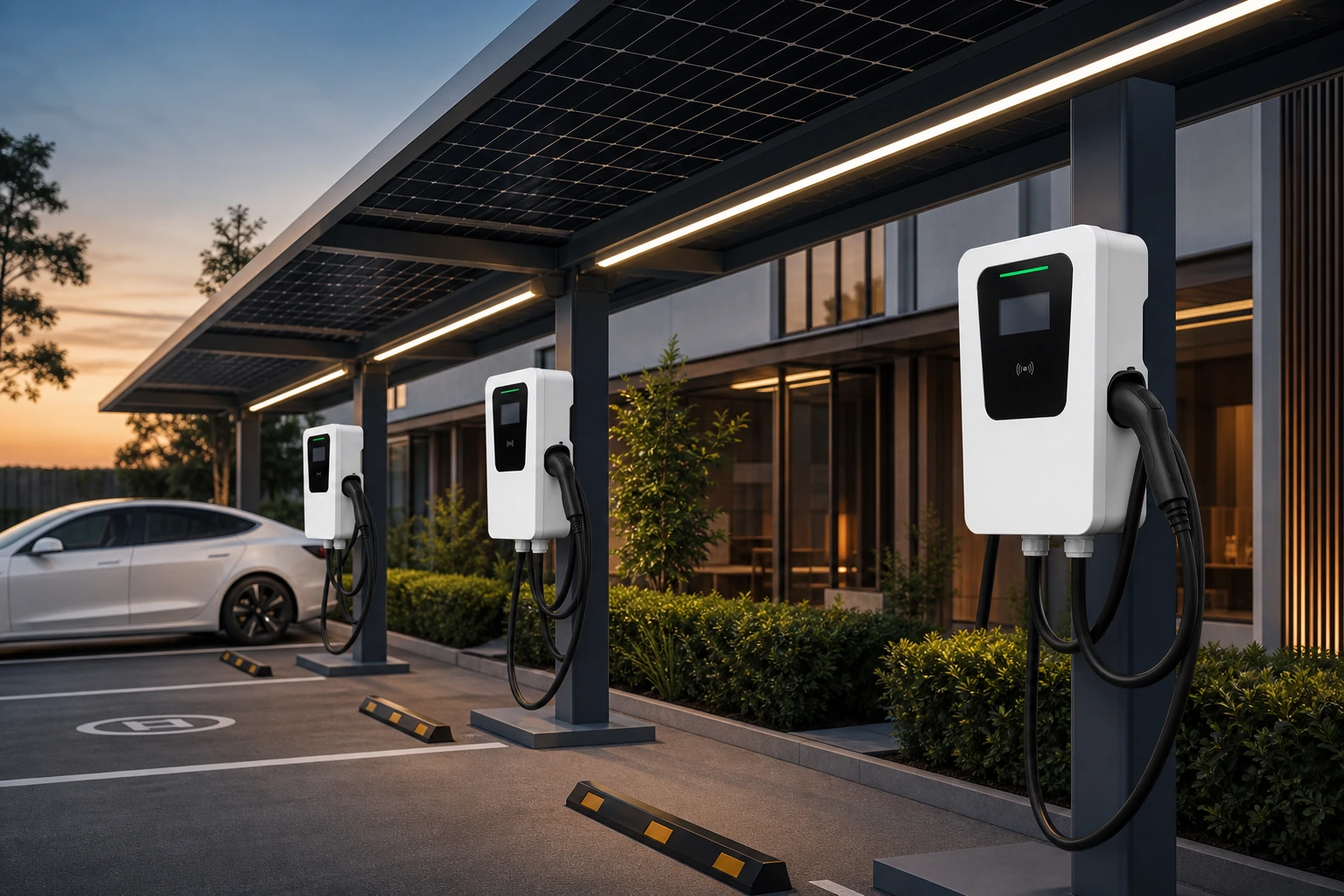
Use AC as a comparison route for public bays where parking duration allows energy delivery over a longer window and site-wide capacity must be distributed carefully.
Review AC charger optionsProduct-family illustration; final enclosure, connector and software scope depend on the selected order.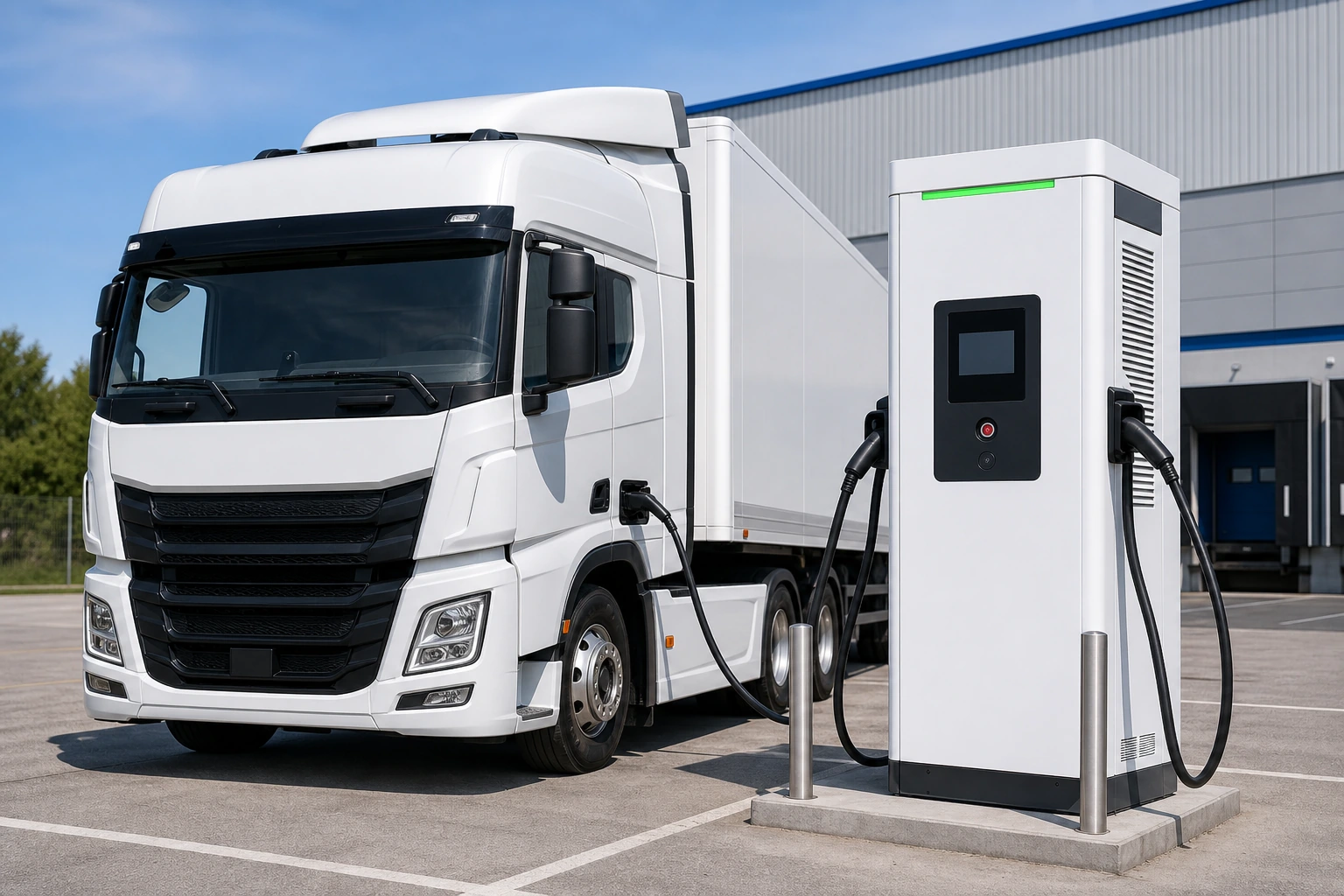
Use DC as a comparison route where turnover and energy-per-session targets require faster charging, subject to vehicle curves and the site's available electrical capacity.
Review DC fast charger optionsProduct-family illustration; project power, connector, backend and documentation must be confirmed.Define whether drivers can start as guests, members or roaming users, and how RFID, an app or another identifier is handled.
Define the required user flow, receipt, pricing display, payment terminal or QR process, and the party responsible for payment services.
List the backend protocol, remote operations, alarms, transaction records, meter data, availability reporting and acceptance tests required.
Connected charger ratings are not the same as the site's actual simultaneous demand. A staged plan needs load inputs, operating assumptions and an agreed expansion path.
Record the grid service, transformer, existing loads, protection, grounding and available connection capacity.
Estimate sessions, vehicle energy, dwell, peak overlap and the intended service level for each charger group.
State whether load management, static limits or another operating rule is required and how it will be tested.
Identify later bay counts, switchgear and cable provisions, communications and the trigger for adding capacity.
See the detailed guides for dynamic load balancing and installation planning inputs.
| Workstream | What the buyer should define | Responsibility to confirm |
|---|---|---|
| Charging equipment | Power, connectors, communication, access, payment interfaces and required technical files | Supplier scope must be stated in the quotation and order documents. |
| Utility and electrical design | Connection application, transformer, switchgear, protection, grounding, meter and cable route | Local utility, licensed designer, EPC and installer responsibilities vary by project. |
| Civil and site works | Foundation, trenching, bollards, drainage, lighting, signage, accessibility and fire provisions | Confirm against local rules, permits and the site owner's requirements. |
| Commissioning and operations | Inspection, energization, backend onboarding, payment testing, handover, maintenance and fault response | Assign acceptance evidence and ongoing service ownership before delivery. |
A budgetary quotation is more useful when the operating assumptions and responsibility boundary are visible from the start.
It is a charging site intended for use by the public rather than only a private fleet, employees or invited users. The project must define guest or member access, payment, operating hours, support, site rules and the responsible operator.
AC charging can fit public locations with longer parking periods, lower energy urgency or a need to cover more bays within a constrained power budget. The decision still depends on vehicle capability, dwell distribution, turnover objectives and site capacity.
A mixed site can serve long-dwell and short-dwell sessions separately, but it is not automatically the right design. Use actual parking behavior, required energy, simultaneous demand, investment boundary and expansion plan to determine the mix.
Provide grid voltage, transformer rating, existing peak loads, available connection capacity, protection and grounding information, cable distance and the number of chargers expected to operate simultaneously.
Define guest and member journeys, authentication, payment method, receipt and pricing display, roaming if required, backend protocol, remote commands, alarms, transaction data and the acceptance test for each integration.
There is no reliable total without a site brief. Equipment quantity and power, grid upgrades, switchgear, civil works, cable routes, payment and backend integration, permits, installation, commissioning and service obligations all affect the budget. See the DC fast-charging cost factors and installation cost questions.
U.S. Department of Energy Alternative Fuels Data Center — infrastructure development
Use this as a general planning reference; local utility, permit and installation rules control the project.
Open Charge Alliance — Open Charge Point Protocol
Use the protocol source to define backend questions, then confirm the functions and test scope supported by the selected charger configuration.