Short answer
For a fleet depot RFQ, send vehicle count, vehicle battery size, daily mileage, return time, charging window, available transformer capacity, target charger power, connector standard, OCPP/CSMS requirement, RFID user plan and whether BESS should be reserved for weak-grid or demand-charge pressure.
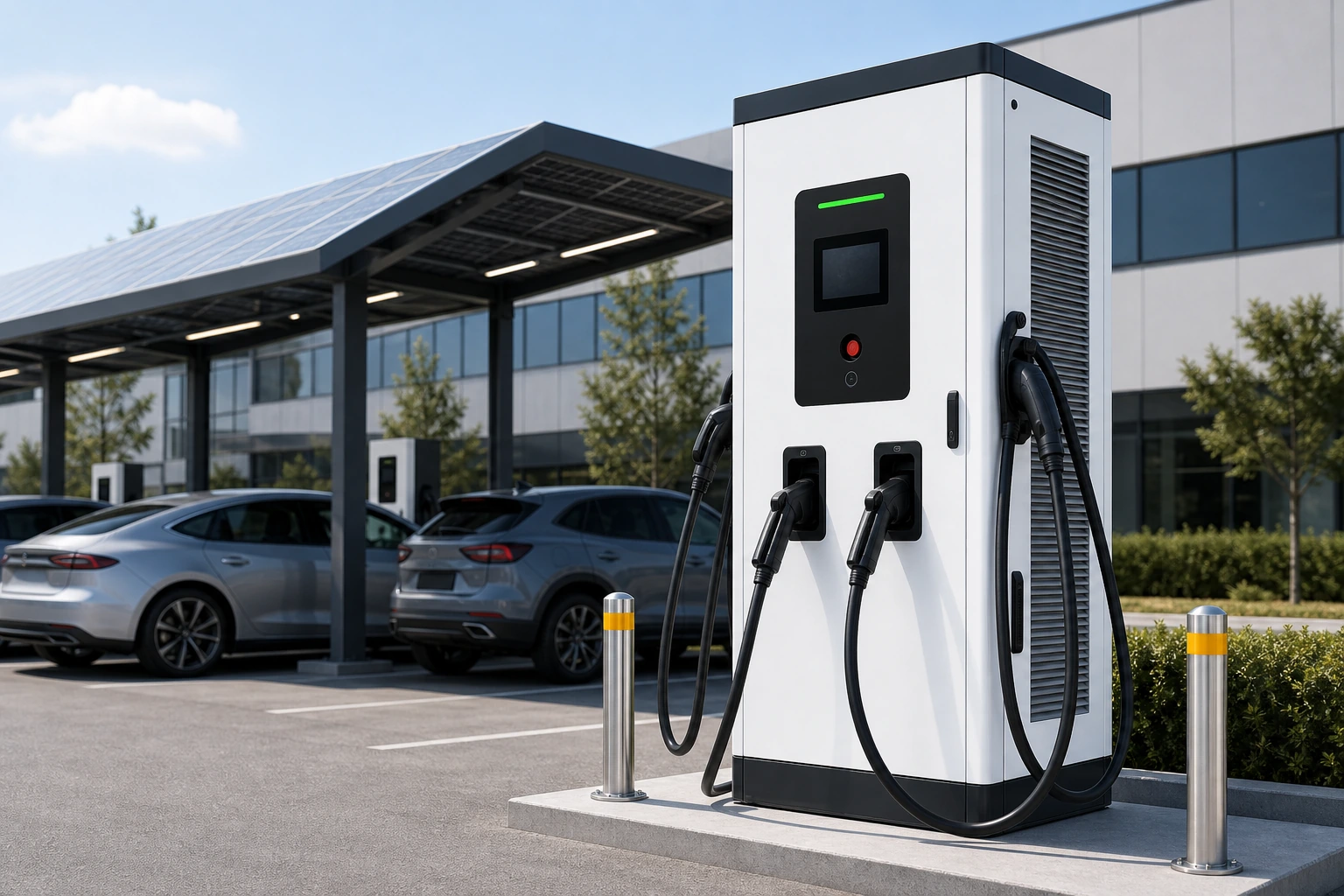
Fleet depot charging is not only a charger purchase. The buyer must match vehicle return time, battery size, available power, charger count, route schedule, RFID user roles and future expansion. Load balancing prevents the depot from oversizing hardware or overloading site power.
Why fleet depots need load balancing
A depot may have enough time to charge vehicles overnight but not enough transformer capacity to run every charger at full power. Smart scheduling and power sharing can reduce grid upgrade pressure while still meeting route readiness.
For buses, taxis, delivery fleets and service vehicles, the key procurement question is not only how fast a charger can charge. The real question is whether the entire fleet is ready before departure.
Depot sizing inputs
| Input | What to collect | Why it matters |
|---|---|---|
| Fleet profile | Vehicle count, battery capacity, daily mileage and return state of charge. | Defines energy needed per night or shift. |
| Charging window | Arrival time, departure time and priority vehicles. | Determines whether lower power is enough or faster DC charging is needed. |
| Power limit | Transformer size, spare capacity, demand charge concern and utility limit. | Defines maximum simultaneous charger output. |
| Charger layout | Parking bay groups, cable reach, connector standard and redundancy target. | Affects charger count and cable management. |
| Software workflow | OCPP, CSMS, RFID driver groups, schedule rules and reports. | Controls user access, priority and load balancing. |
Typical charger packages
| Fleet type | Possible configuration | Procurement note |
|---|---|---|
| Light delivery fleet | 22kW AC chargers plus selected 60kW DC backup. | Good when vehicles park for long overnight windows. |
| Taxi or ride-hailing depot | 60kW to 120kW DC chargers with RFID and session reporting. | Higher turnover and shorter charging windows. |
| Bus depot | 120kW to 240kW DC chargers with scheduling and redundancy. | Route departure time and transformer capacity drive selection. |
| Heavy truck depot | 180kW to 360kW DC or distributed HPC planning. | Requires power study, cable plan and possible BESS buffer. |
When to consider a BESS buffer
A battery energy storage system may help when the depot has a weak grid, high demand charges, limited transformer upgrade options or a plan to add solar later. BESS does not replace site engineering, but it can smooth peak charging demand and keep charger output more stable.
For early quotation, ask the factory to separate charger scope from BESS scope so the buyer can compare pure grid, smart scheduling and solar+BESS options.
Fleet depot RFQ checklist
| RFQ item | Example detail |
|---|---|
| Vehicle data | Number of vehicles, battery kWh, daily route distance and return SOC. |
| Timing | Arrival batches, charging window, priority vehicles and departure time. |
| Power limit | Transformer size, available spare kW and utility restrictions. |
| User control | RFID cards, driver groups, charger reservation and report export. |
| Expansion plan | Future vehicle count, additional chargers, solar or BESS plan. |
RFQ hook
Send vehicle count, daily mileage, charging window, power limit and target country. SUNFULL can help compare AC, DC and BESS-supported depot options.
FAQ
What is load balancing for fleet EV charging?
Load balancing allocates available site power across chargers so vehicles can charge within the schedule without exceeding the depot power limit.
Do fleet depots always need DC fast chargers?
No. Long overnight parking may use AC chargers, while short charging windows or high-mileage fleets usually need DC chargers. Many depots use a mixed plan.
When should a fleet depot add BESS?
BESS may help when grid capacity is limited, demand charges are high, transformer upgrade is difficult or the depot plans to combine solar and charging.
What should I send for a fleet charging quote?
Send vehicle count, battery size, daily mileage, return time, charging window, available power, charger power target, connector type, RFID/OCPP requirement and expansion plan.
Related SUNFULL pages
Primary sources and review scope
These public research and procurement sources support the general depot-load and infrastructure-planning framework. They do not validate a SUNFULL project result or replace a site electrical study.
Project review checklist
Allocate site power around departure priorities
Vehicle inputs
Record vehicle count, battery capacity, daily mileage, return state and priority routes.
Time inputs
Map arrival groups, charging windows, departure times and fast-turnaround exceptions.
Power inputs
Confirm transformer size, spare capacity, utility limit, charger count and simultaneous-output rule.
Control inputs
Define OCPP or CSMS, RFID groups, scheduling, reporting, redundancy and future expansion.
Related planning pages
Need a fleet depot charger plan?
Send vehicle count, daily mileage, charging window, power limit and target country. SUNFULL can help compare AC, DC and BESS-supported depot options.
Send depot layout and charging schedule for review
Share vehicle count, charging window, grid limit, route schedule, AC/DC mix and OCPP needs. SUNFULL can suggest a practical charger and load balancing scope.
Load balancing is a procurement decision
The cheapest charger count is not always the cheapest site plan. If the depot can schedule charging by route window, buyers may reduce grid upgrade pressure and avoid oversizing every charger.
Separate daily operation from future expansion
A first phase can combine 22kW AC chargers and selected DC chargers, while reserving cabinet position, cable route and CSMS configuration for later expansion.
Buyer FAQ
Should fleet depots use AC or DC chargers?
Most depots use a mix. AC fits overnight dwell time, while DC supports fast turnaround or high-utilization vehicles.
What data is needed for load balancing design?
Send transformer capacity, charger count, vehicle schedule, parking layout, connector type, route windows and CSMS needs.
Can SUNFULL suggest a conservative first phase?
Yes. A first phase can be sized around current route needs while keeping space and backend scope for later expansion.