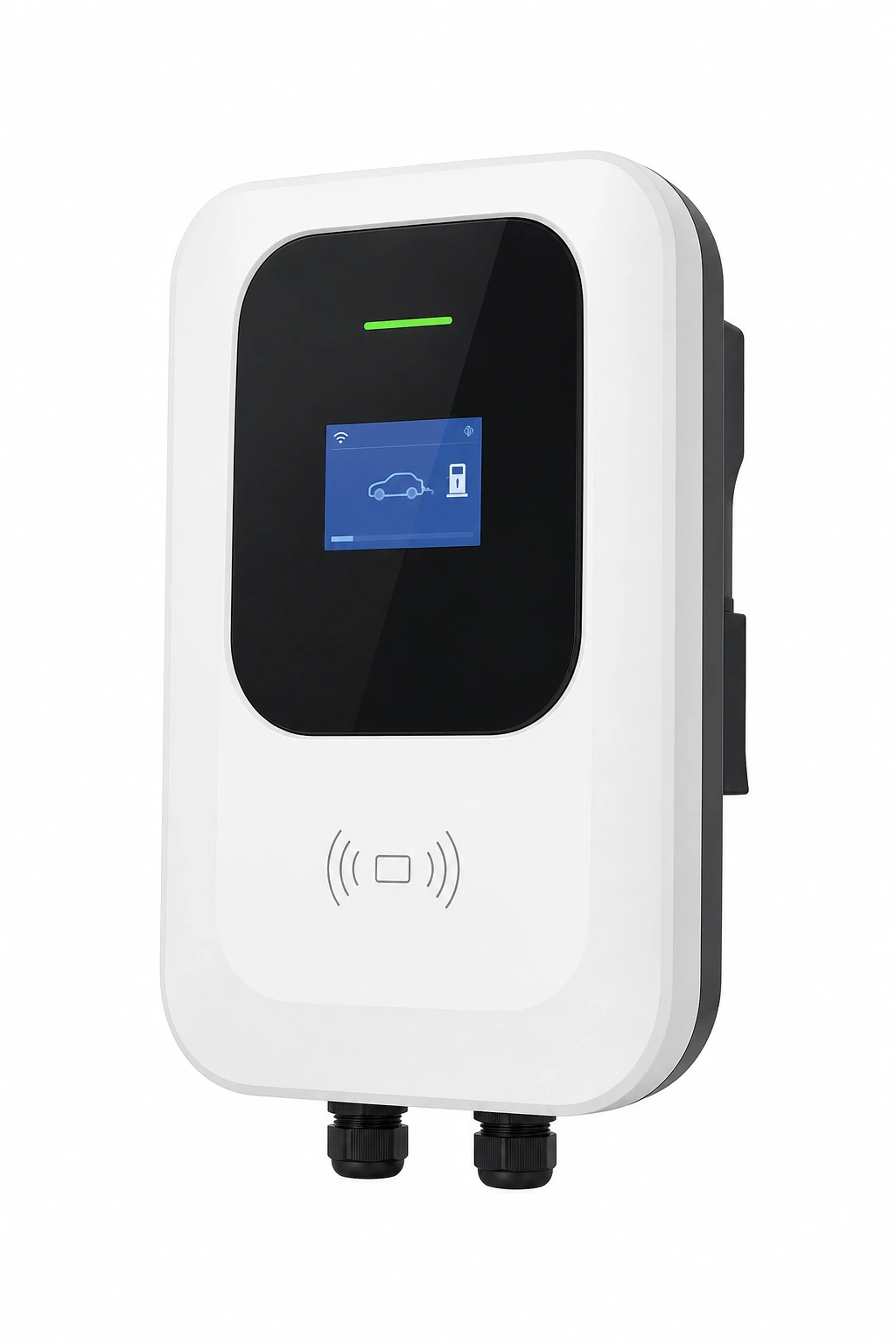
Short answer
Before choosing a Level 2 EV charger, confirm the destination country, nominal voltage, phase, available continuous current, wiring and protective-device design, charger quantity, parking schedule, vehicle onboard-charger limits and load-management requirement. The charger supplier can match a product family to this information, but a licensed local electrical professional must approve the final circuit and installation.
“Level 2” describes an AC charging class, not one universal plug, circuit or charging speed. A 7kW, 11kW or 22kW wallbox can serve a similar buyer journey while requiring a different electrical input and delivering a different result depending on the vehicle and site. Commercial buyers should therefore separate product selection from local electrical design.
Level 2 power classes should be matched to the market
In the United States, Level 2 commonly refers to AC EVSE supplied at 208V or 240V. Other markets commonly describe 7kW single-phase and 11kW or 22kW three-phase wallboxes as AC charging products. These labels are not interchangeable without checking the quoted model, connector and destination-market electrical rules.
| Planning path | Typical buyer use | Electrical questions to send | Vehicle and operating check |
|---|---|---|---|
| 7kW AC wallbox | Long-dwell apartment, hotel, home-brand and workplace parking. | Nominal voltage, phase, available continuous current, cable route and local protective-device plan. | Can the vehicle use the offered AC power, and is the parking window long enough? |
| 11kW AC wallbox | Workplace, commercial parking and fleet vehicles where three-phase supply is available. | Phase, voltage, current per charger, total charger count and simultaneous-demand allowance. | Which vehicles accept 11kW AC, and does the project need OCPP, RFID or scheduled charging? |
| 22kW AC wallbox | Higher-turnover destination or commercial parking with suitable site and vehicle capability. | Three-phase capacity, diversity, cable length, voltage drop review and managed-load strategy. | Do enough vehicles accept 22kW AC to justify the additional site capacity? |
Level 2 EV charger amps are only one part of the design
Current is important, but buyers should not copy an amp figure from a generic page into a tender. The permitted continuous load, conductor size, protection, isolation, earthing, cable route, ambient conditions and local code all affect the final design. The quoted charger datasheet and the local electrical study must refer to the same model and current setting.
For a multi-bay site, record the current available to the complete charging system—not only the maximum current printed on each wallbox. If ten chargers are installed, the project may use a managed allocation rather than reserving every unit’s full nameplate demand at the same time.
What determines Level 2 charger speed?
Level 2 charger speed is limited by the weakest part of the charging path. The vehicle onboard charger may accept less AC power than the wallbox can offer. The site can impose a lower current setting. Load management can reduce power when other chargers or building loads are active. Battery state, temperature and the vehicle’s own charging strategy can also change the observed session rate.
For commercial planning, use energy and time rather than a universal “hours to full” claim. Send average daily energy required per vehicle, arrival state of charge, expected departure time and the number of simultaneous vehicles. This lets the project team decide whether 7kW, 11kW, 22kW or a mixed AC/DC layout better matches the business operation.
Multiple commercial Level 2 EV chargers need a site-level load plan
A commercial Level 2 EV charger project may serve employees, hotel guests, apartment residents, fleet vehicles or public users. Each scenario needs a different access and power-allocation rule. A workplace may prioritize vehicles by departure time, while an apartment project may cap current per user and a hotel may combine overnight AC charging with one faster DC option.
| Site question | Why it matters | Information for the RFQ |
|---|---|---|
| How many bays can charge together? | Defines the simultaneous demand and power-allocation rule. | Installed bays, expected active sessions and future expansion. |
| What building load competes with charging? | Charging may need to follow a site limit or meter signal. | Capacity reserved for EV charging and whether dynamic control is required. |
| Who is allowed to start a session? | Changes RFID, app, OCPP, free-use and billing requirements. | User groups, authorization flow and backend responsibility. |
| When must vehicles be ready? | Determines whether managed AC charging can meet the schedule. | Arrival, departure, energy target and priority exceptions. |
Level 2 EV charger cost starts with electrical scope
Level 2 EV charger cost is not only the wallbox price. A commercial budget can include distribution equipment, circuit protection, cabling, trenching or conduit, pedestal and cable management, networking, OCPP or CSMS integration, commissioning, signage, local permits and ongoing support. Buyers should compare quotations at the same boundary.
Ask the supplier to identify what is included in the charger package and what remains with the local installer. If the project has several parking zones, provide a site plan or cable-distance estimate before treating one unit price as the complete installed cost.
Supplier scope and installer scope should stay separate
| Responsibility | Charger supplier discussion | Local project responsibility |
|---|---|---|
| Product configuration | Power, connector, socket or cable, access, communications, enclosure, mounting accessories and model files. | Approve the configuration against vehicles, site and destination requirements. |
| Electrical installation | Provide available model-specific installation information and input requirements. | Licensed design, circuit, protection, wiring, earthing, permits, inspection and commissioning. |
| Backend and users | Confirm OCPP or access scope supported by the selected configuration and agreed acceptance test. | CSMS account, tariffs, user support, network service and operating policy. |
| Compliance evidence | Identify available documents for the exact model and market; sensitive files may be shared privately. | Confirm local acceptance, registration and project-specific approvals. |
Level 2 EV charger electrical requirements RFQ checklist
- Destination country, site type and installation environment.
- Nominal voltage, phase and capacity reserved for EV charging.
- 7kW, 11kW or 22kW preference and whether the power can be adjusted.
- Number of chargers, simultaneous sessions and expansion plan.
- Vehicle connector, onboard-charger capability and parking schedule.
- Socket or tethered cable, cable length, wall or pedestal mounting.
- RFID, app, OCPP, load management, meter or payment requirements.
- Target documents, label language, branding, sample quantity and batch estimate.
Do not send only “Level 2 charger price”
Send country, site phase, available current, charger quantity, 7kW/11kW/22kW preference, connector, OCPP or load-management need and target documents. SUNFULL can then discuss a product path while the local electrical professional completes the installation design.
Buyer FAQ
What electrical information is needed before selecting a Level 2 EV charger?+
Confirm country, nominal voltage, phase, available continuous current, protective-device and wiring design, cable route, charger quantity, parking schedule, vehicle onboard-charger limits and whether site load management is required. A licensed local electrical professional must approve the final installation.
Does a 22kW wallbox always charge faster than a 7kW charger?+
No. The actual AC charging rate can be limited by the vehicle onboard charger, site phase and current, load-management settings or operating rules. Higher wallbox nameplate power only helps when the complete charging path can use it.
Do multiple Level 2 chargers need load management?+
Load management should be evaluated whenever the combined charger demand may exceed the capacity reserved for charging or when the operator needs to allocate power by schedule, user or parking zone. The final design depends on the site electrical study and operating policy.
Can SUNFULL provide installation and compliance files?+
Available datasheets, installation information and applicable model-specific compliance files can be shared privately with qualified project buyers after the exact model, configuration and destination market are confirmed.
Official reference scope
The following sources support general EVSE definitions, procurement and installation planning. They do not certify SUNFULL or any specific charger model, and they do not replace local electrical design or approval.
- U.S. Department of Energy: EVSE infrastructure training
- U.S. Department of Energy: purchasing energy-efficient EVSE
- ENERGY STAR: EVSE key product criteria
Related product and procurement pages
Request a Level 2 charger model shortlist
Send country, voltage and phase, available current, charger quantity, parking schedule, connector, OCPP or load-management need and target documents.