Short answer
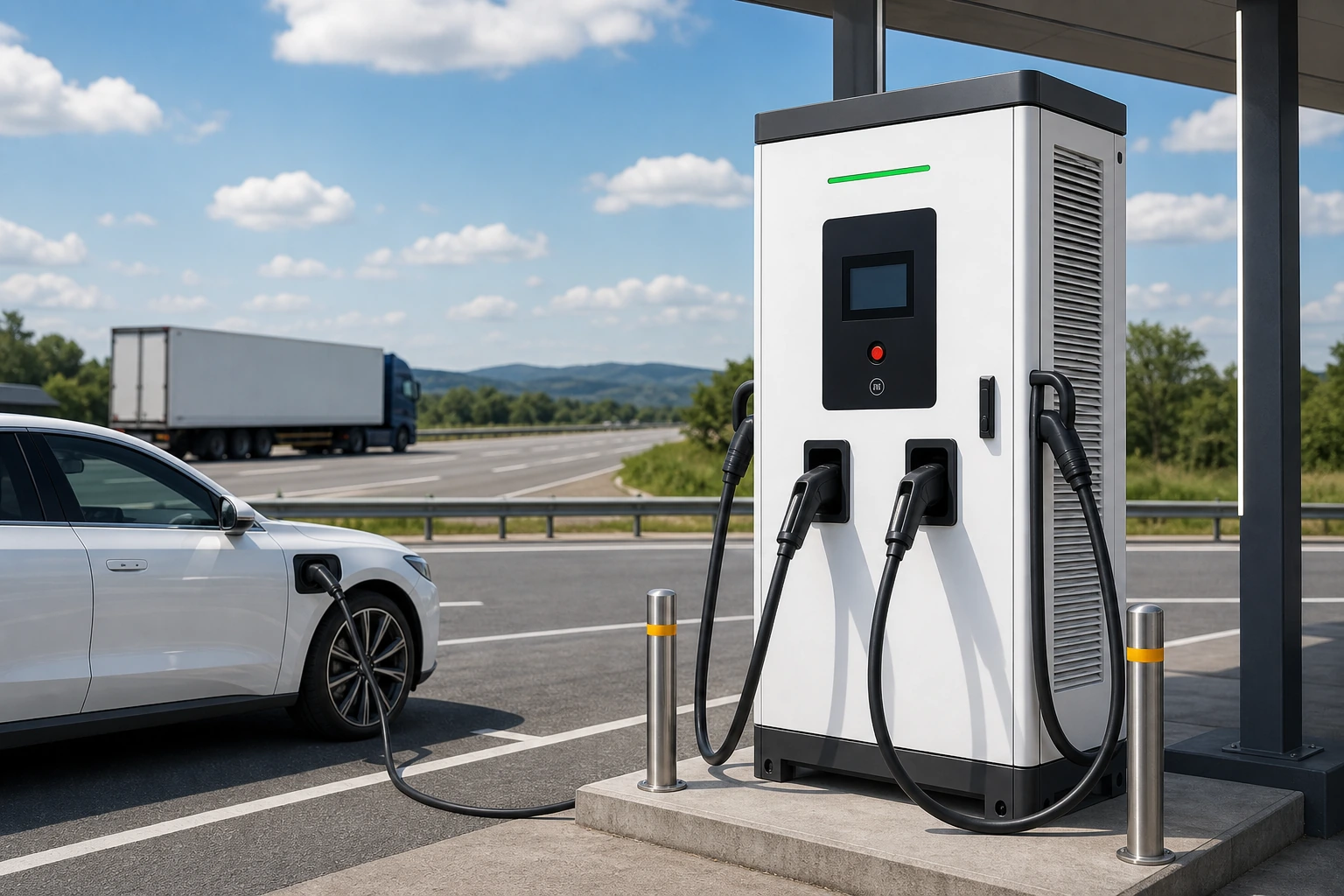
A 150kW DC fast charger is a Level 3 charger designed for faster commercial charging than small city DC chargers. It is a common middle power for highway service areas, public charging hubs, bus depots and fleets that need stronger turnover without moving directly to 240kW or higher high-power charging.
Why 150kW is a practical buying category
Buyers who search for 150kW DC fast charger, 150kW DC charger, 150kW EV charger or 150kW DC charger factory China are usually comparing a specific power class, not browsing general charger information. Related price and station-planning questions also show that 150kW is often evaluated for real commercial projects.
This page explains the buying question. For the product specification and quotation path, use the dedicated SUNFULL 150kW DC fast charger page.
Typical 150kW charger specification areas
| Specification area | What buyers should confirm | Why it matters |
|---|---|---|
| Power output | Maximum cabinet output, single-gun output and dual-gun sharing logic. | Two chargers with the same 150kW label can behave differently when two vehicles charge. |
| Connector standard | CCS2, CHAdeMO, GB/T or custom connector mix for the target fleet. | Connector choice affects market fit, cable stock and spare parts. |
| Voltage and current | Output voltage range, maximum current and vehicle compatibility. | Important for newer battery platforms and real charging speed. |
| OCPP / CSMS | OCPP version, backend test plan, authorization and reporting. | Commercial stations need remote operation, payment and uptime monitoring. |
| Outdoor use | IP rating, thermal design, cable length, screen and payment module. | Highway and petrol-station sites need stable outdoor service. |
When a 150kW DC charger is a good fit
- Highway service areas: useful when the station needs faster turnover than 60kW or 120kW charging.
- Commercial parking hubs: good for premium fast charging at malls, hotels, workplaces and mixed public sites.
- Fleet depots: practical when buses, taxis or vans have limited charging windows.
- Starter CPO networks: often easier to justify than 240kW if grid capacity and utilization are still developing.
150kW vs lower and higher power options
| Option | When it makes sense | Main tradeoff |
|---|---|---|
| 60kW | Limited grid capacity, city parking, longer dwell time. | Lower cost and grid load, but slower turnover. |
| 120kW | Balanced fleet or public parking use. | Good middle option, but may be slow for highway peak demand. |
| 150kW | Highway, public hub, fleet depot and larger commercial sites. | Stronger speed, but needs better electrical planning. |
| 240kW | High utilization station, premium public charging, larger battery vehicles. | Higher grid, cable, cooling and project cost. |
| 320kW+ | Heavy-duty, 800V, large hub or future expansion project. | Needs strong site design and clear business case. |
Power requirement questions
A 150kW charger does not only require a 150kW label on a datasheet. The buyer should check transformer capacity, input voltage, cable routing, load management, local protection requirements and future expansion. If the site will install multiple chargers, ask whether a phased plan or BESS buffer is practical.
Procurement tip
Ask the supplier to show a power allocation diagram for single-gun and dual-gun charging. It should explain whether one vehicle can receive the full 150kW and how power is shared when two vehicles charge at the same time.
FAQ
What is a 150kW DC fast charger?
A 150kW DC fast charger is a Level 3 charger that can deliver up to 150kW DC output to EVs when the vehicle and site conditions allow it. It is often used for highway, public charging, bus depot and commercial fleet projects.
Is 150kW enough for highway charging stations?
150kW is often a practical starting power for highway and petrol-station sites when daily traffic is moderate. Higher-traffic sites may compare 150kW with 180kW, 240kW or higher power chargers.
How much power does a 150kW EV charger need?
A 150kW charger requires site electrical capacity above the charger output after considering efficiency, auxiliary load, local voltage, transformer margin and any future expansion plan.
What affects 150kW DC fast charger price?
Price depends on connector standard, gun count, output voltage and current, enclosure rating, cooling method, payment module, OCPP or CSMS integration, certification scope, spare parts and freight.
Related SUNFULL pages
Need a 150kW charger quotation?
Send country, site type, vehicle mix, connector standard, quantity, payment method and OCPP needs. SUNFULL can prepare a 150kW DC charger configuration for technical and commercial review.
View 150kW charger specs Request 150kW DC quote WhatsApp site details
What should buyers know before sourcing a 150kW DC fast charger?
A 150kW DC fast charger is a commercial fast-charging option for sites that need faster turnover than AC or lower-power DC. Buyers should confirm connector, power sharing, OCPP, payment, certification, cable reach, grid capacity and quantity before asking price.
Highway stops, petrol stations, fleet depots, taxi hubs and CPO charging locations.
Single or dual connector, CCS2, CCS1, CHAdeMO or GB/T, OCPP/CSMS and payment method.
Ask for model-specific datasheet, test evidence, certificate file list, warranty and spare-parts recommendation.
Send a 150kW DC charger project brief
Share connector, OCPP/payment needs, grid capacity, country, quantity and delivery timeline. SUNFULL can match model and document scope.
150kW fits many first commercial DC sites
For buyers entering public or fleet charging, 150kW is often a practical balance between user experience, grid demand and investment level. It is stronger than compact DC chargers but not as demanding as 240kW or 320kW high-power stations.
Dual-gun behavior should be clear
Buyers should ask whether the charger delivers full power to one connector, how power is shared when two vehicles charge, and whether the screen, cable and connector layout fit the parking bay. These details affect real user experience.
Quote with site and operation details
A good 150kW quotation should include charger model, connector, OCPP/payment scope, document list, packing size, lead time, warranty and optional spare parts. Price alone is not enough for project purchasing.
Buyer FAQ
Is a 150kW DC charger enough for highway charging?
It can fit many highway or petrol station sites, especially pilot or medium-traffic locations. Higher power may be needed for heavy turnover or heavy-duty vehicles.
Can a 150kW charger support two connectors?
Many models can support dual connectors, but buyers should confirm power sharing and connector configuration before ordering.
What should I send for a 150kW quote?
Send connector standard, country, grid capacity, OCPP/payment needs, quantity, certification target and expected delivery time.