Short answer
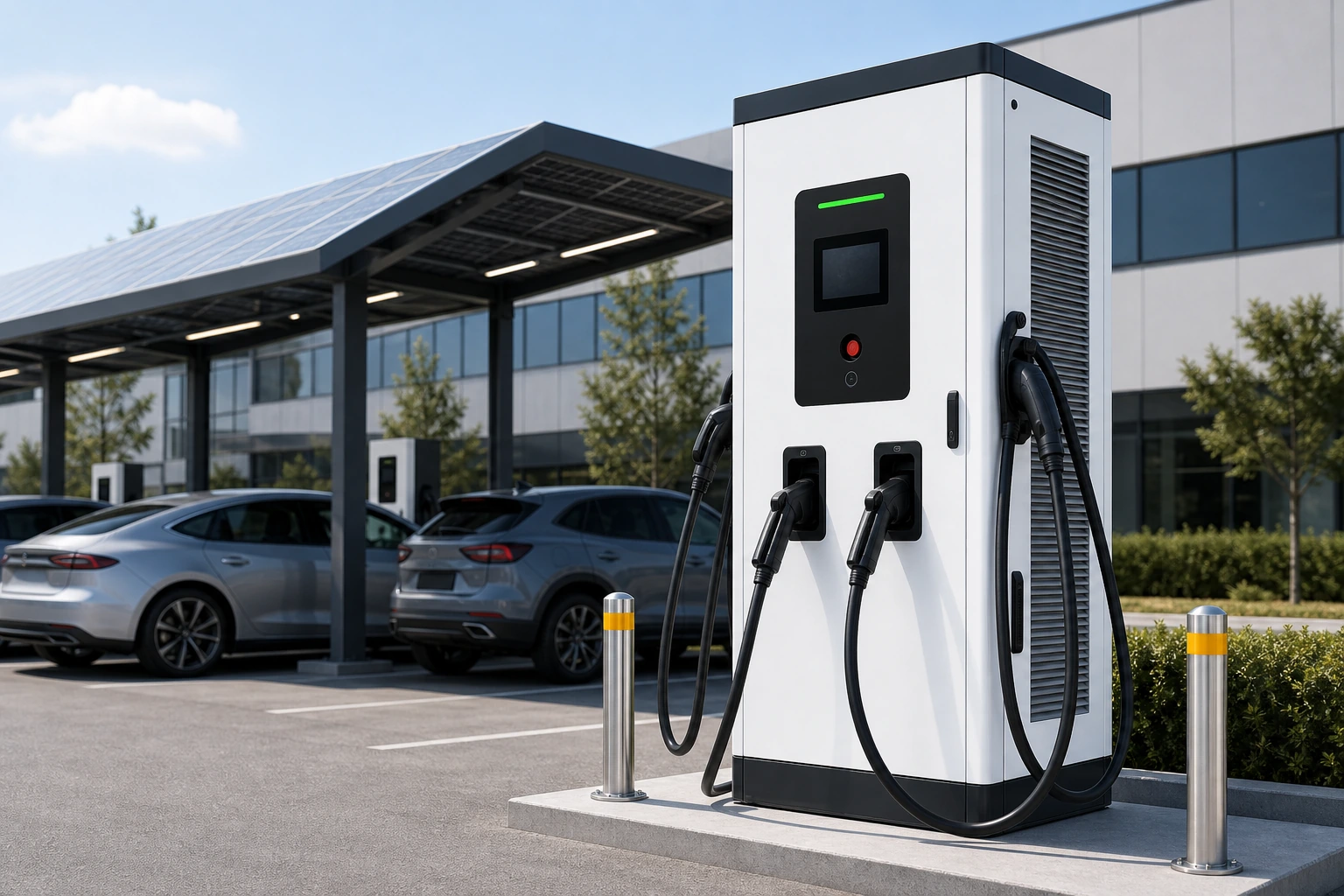
A Level 3 charger is a DC fast charger for commercial and public EV charging. It converts AC grid power into DC power inside the charger cabinet, then delivers high-power DC output directly to the vehicle battery. For B2B projects, the real decision is not the label "Level 3"; it is whether the site needs 60kW, 120kW, 150kW, 240kW or a higher-power configuration.
When a commercial site should evaluate Level 3 charging
Buyers comparing Level 3 charging are often planning a fleet depot, gas station, hotel, shopping mall, commercial parking lot or public charging operation. The site duty cycle and electrical capacity should drive the power decision.
For these buyers, a useful answer must cover charger power, connectors, grid capacity, payment method, OCPP backend and local installation boundary. A simple product price is not enough to build a reliable station.
Level 3 charger power classes
| Power class | Typical site fit | Buyer note | Next page |
|---|---|---|---|
| 40kW to 80kW | Urban parking, taxi top-up, small commercial sites | Useful when grid power is limited or dwell time is longer. | 60kW DC charger |
| 100kW to 120kW | Fleet depot, mixed public parking, commercial hub | A balanced option when one cabinet needs dual-gun service. | DC fast charger range |
| 150kW | Highway site, larger fleet, high-turnover public hub | Evaluate against vehicle acceptance limits, session time, site traffic and available grid capacity. | 150kW DC fast charger |
| 180kW to 240kW | Highway corridor, petrol station, busy CPO site | Needs stronger grid planning and clearer utilization assumptions. | 150kW vs 240kW guide |
| 320kW and above | Heavy-duty charging, large public hub, future 800V sites | Best justified by short dwell time, larger batteries or high daily sessions. | HPC charger guide |
Level 3 charger vs Level 2 charger
Level 2 AC chargers are usually installed for longer parking time. Level 3 DC fast chargers are selected when vehicle turnover, daily sessions and charging speed matter more. Commercial sites often use both: AC chargers for destination parking and DC chargers for fast service.
| Item | Level 2 AC charger | Level 3 DC fast charger |
|---|---|---|
| Typical power | 7kW to 22kW | 40kW to 360kW+ |
| Best for | Home, workplace, hotel, long parking | Fleet, public station, highway, commercial parking |
| Charging speed | Lower, depends on onboard charger | Higher, charger supplies DC power directly |
| Project scope | Lower electrical load | More grid, cooling, cable and backend planning |
What affects Level 3 charger cost?
Cost questions around Level 3 chargers often come from buyers who are close to preparing an RFQ. The quote depends heavily on scope, so buyers should separate SUNFULL hardware and configuration from local civil work, transformer upgrade and installation labor.
- Power rating: 60kW, 120kW, 150kW, 240kW or higher.
- Connector standard: CCS2, CHAdeMO, GB/T or mixed connectors.
- Number of charging guns and dynamic power sharing logic.
- Payment hardware: RFID, QR payment, POS terminal or app operation.
- OCPP or CSMS backend testing for commercial operation.
- Outdoor protection, cooling design, spare parts and packing.
RFQ checklist for Level 3 charging stations
| RFQ item | What to provide | Why it matters |
|---|---|---|
| Site type | Parking lot, fleet depot, highway, petrol station or mall. | Sets the expected dwell time and power level. |
| Vehicle mix | Passenger EV, taxi, bus, logistics van or truck. | Impacts output voltage, connector and cable handling. |
| Power target | 60kW, 120kW, 150kW, 240kW or higher. | Controls cabinet design and grid requirement. |
| Operation model | Free charging, RFID, QR payment, POS or CPO backend. | Defines OCPP, payment and software scope. |
| Country and documents | Destination market, certificate needs and import responsibility. | Prevents mismatched certification or connector scope. |
Procurement tip
When comparing Level 3 charger suppliers, ask for a configuration sheet that lists power module size, output voltage range, maximum current, connector type, OCPP version, cable length, enclosure rating and payment options. Similar cabinet prices can hide very different specifications.
FAQ
What is a Level 3 charger?
A Level 3 charger is a DC fast charger that sends DC power directly to an EV battery. Commercial projects usually compare 60kW, 120kW, 150kW, 240kW or higher power levels.
Is a Level 3 charger the same as a DC fast charger?
In commercial sourcing, Level 3 charger and DC fast charger usually refer to the same charger class. The exact specification still depends on power, connector type, output voltage, OCPP and site design.
How much does a Level 3 charger cost?
Level 3 charger cost depends on power rating, connector count, payment hardware, enclosure rating, OCPP backend testing, freight and local electrical work. Buyers should compare full project scope, not only cabinet price.
Can Level 3 charging be used at home?
Level 3 charging is normally for commercial, fleet, public parking and highway sites because it requires higher electrical capacity and professional installation. Home charging usually uses AC Level 2 chargers.
Related SUNFULL pages
Primary sources and review scope
These U.S. Department of Energy sources support the general charging-level terminology and project-planning factors used here. They do not certify SUNFULL or any specific charger model.
Project review checklist
Level 3 means DC fast charging, but power is a project decision
Use case
Define fleet, public parking, highway, petrol station, retail or other commercial site and expected vehicle turnover.
Power class
Choose a starting range from dwell time, battery size, daily sessions and available electrical capacity.
Connector and operation
Confirm target vehicles, connector count, power sharing, OCPP or CSMS, RFID and payment needs.
Full project scope
Separate charger hardware from freight, grid and civil work, installation, documents, spare parts and commissioning.
Related planning pages
Need a Level 3 charger recommendation?
Send your country, site type, expected vehicle mix, target power, connector standard and OCPP/payment needs. SUNFULL can help prepare a practical Level 3 charger configuration for commercial review.
Send Level 3 site details for DC charger proposal
Share site type, vehicle dwell time, grid power, connector, OCPP/payment needs and quantity. SUNFULL can suggest 60kW, 120kW, 150kW or higher DC options.
Level 3 is a project decision, not only a charger label
Level 3 is commonly used as another name for DC fast charging. The right model depends on parking time, vehicle battery size, traffic turnover, grid power and whether the site will charge for revenue.
Do not skip site-power discussion
Level 3 charging can require significant electrical capacity. A supplier should ask about transformer capacity, input voltage, installation environment, charging window and whether the site plans one charger or multiple charging bays.
Plan software before opening the site
Public and fleet Level 3 chargers often need OCPP, RFID, QR, POS or a CSMS. Testing the workflow before shipment helps avoid commissioning delays after installation.
Buyer FAQ
Is Level 3 charging the same as DC fast charging?
In many markets, Level 3 refers to DC fast charging. The exact naming can vary, so buyers should specify DC charger power and connector standard.
What power should a Level 3 charger use?
60kW, 120kW, 150kW and higher options fit different traffic and grid conditions. The best choice depends on vehicle dwell time and site capacity.
What should I send before asking Level 3 charger price?
Send site type, target market, connector, grid capacity, OCPP/payment needs, quantity, document requirements and expected delivery time.