The crisis that became a market
South Africa entered 2024 with the worst rolling blackouts in the country's history. Eskom-managed loadshedding reached Stage 6 levels for sustained periods, leaving households and businesses without power for 8 to 12 hours per day. The economic impact, estimated by the South African Reserve Bank at over R900 million per day at peak loadshedding, fundamentally reshaped consumer expectations around energy resilience.
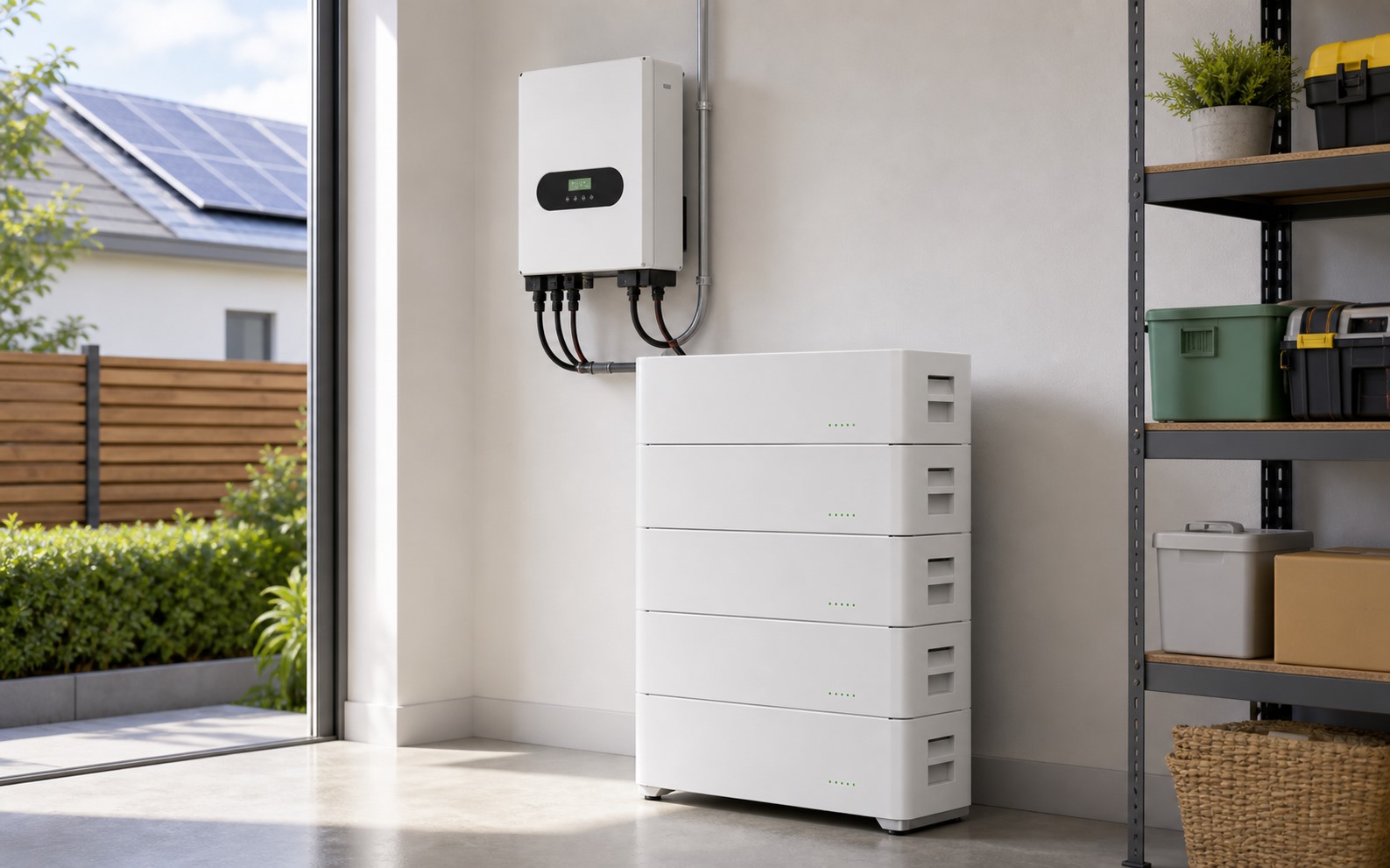
For South African residential and commercial projects, hybrid inverter and storage procurement should begin with verified load data, outage requirements, available grid connection, PV capacity and local utility rules. The inverter links PV, batteries, grid supply and site loads, but the correct configuration depends on the installation rather than a market-growth headline.
Why hybrid (and not pure backup)
The technical argument for hybrid inverters has always been stronger than pure-backup UPS systems for sites with PV. A hybrid inverter can: (1) harvest solar production during the day, (2) charge the battery during off-peak grid windows, (3) discharge the battery during loadshedding events, and (4) sell excess back to the grid where net metering allows. Actual savings and payback depend on tariffs, outage frequency, solar production, battery cycling, financing, maintenance and local export rules; they should be modeled from site data rather than assumed from a generic range.
The commercial argument is equally compelling for installers. A pure backup system commits the battery only to outage events; a hybrid system can put cycles on the battery every day, justifying premium LiFePO4 chemistry over cheaper lead-acid. That, in turn, increases ticket size and recurring service revenue.
NRS 097-2-1: confirm the grid-interface scope
NRS 097-2-1 defines requirements for the utility interface of small-scale embedded generation connected to low-voltage networks. The project team should confirm the exact inverter model, utility rules, protection settings and registration process with the relevant municipality or utility before installation.
For procurement, the useful distinction is whether the quoted product documents match the exact inverter and whether the installer can use them for the local connection process. Avoid treating a standard name, logo or generic certificate image as proof for every model.
What sunfull and SUNFULL offer
SUNFULL can quote 5kW, 8kW and 10kW hybrid inverter platforms with stackable LiFePO4 storage. Before order, request the exact model datasheet, available grid-interface test scope, firmware and protection settings, battery compatibility and responsibility for local utility approval.
For distributors entering South Africa, the RFQ should cover site sizing assumptions, sample bill of materials, packing and container plan, destination port, Incoterms and document responsibilities. Current duties and tax treatment must be confirmed by the importer or customs adviser.
The 24-month outlook
Policy, tariffs and grid conditions can change. Buyers should verify current incentives, utility rules and project economics at the time of quotation, then size storage from measured loads and required backup duration.
For installers and resellers, the practical next step is a model-specific RFQ covering load profile, inverter and battery configuration, document scope, local approval boundary, quantity, warranty process and delivery terms.