Hybrid inverter
Coordinates PV, a compatible battery, grid connection and backup or energy-management functions. Start here when storage is part of the project.
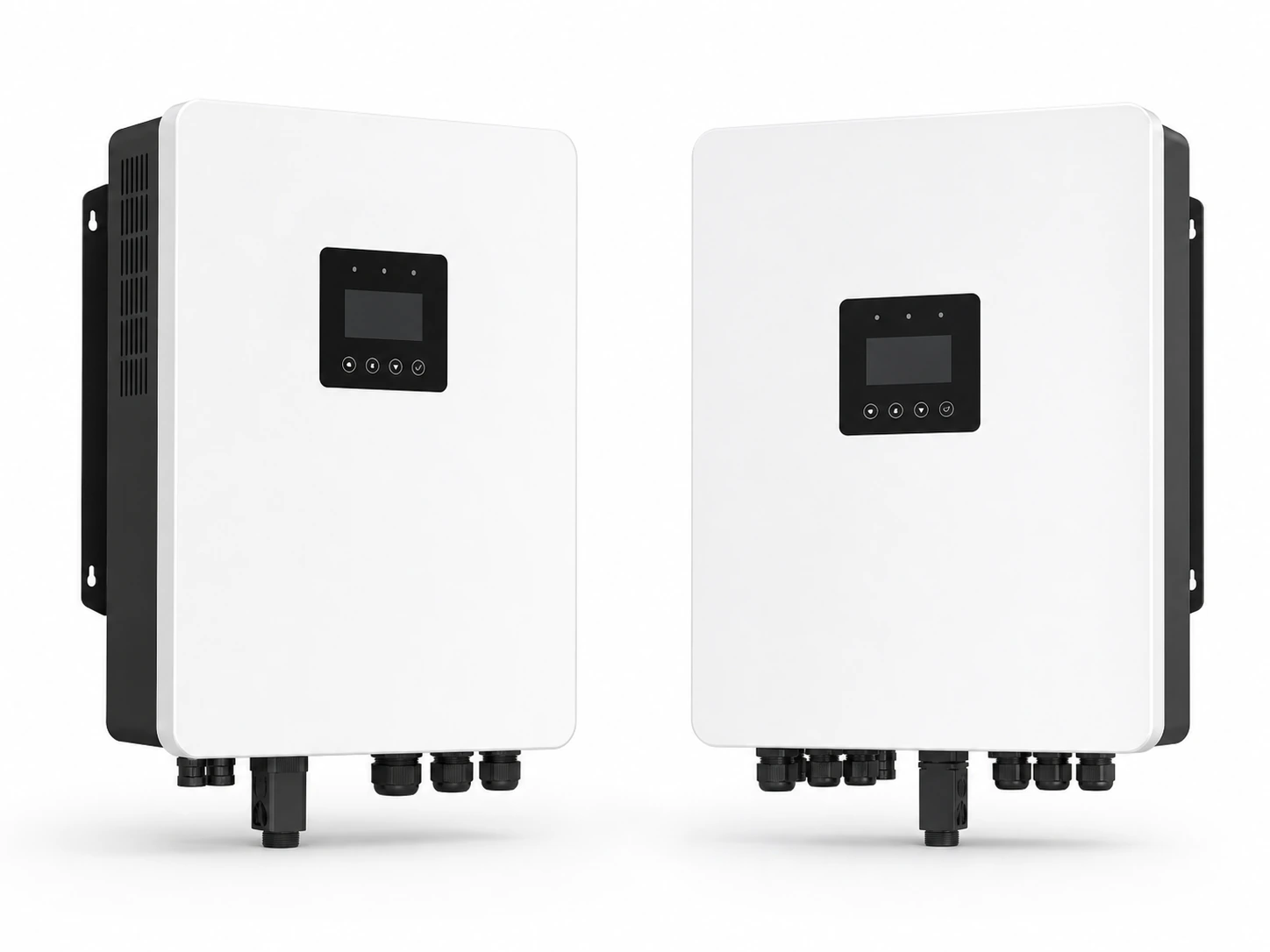
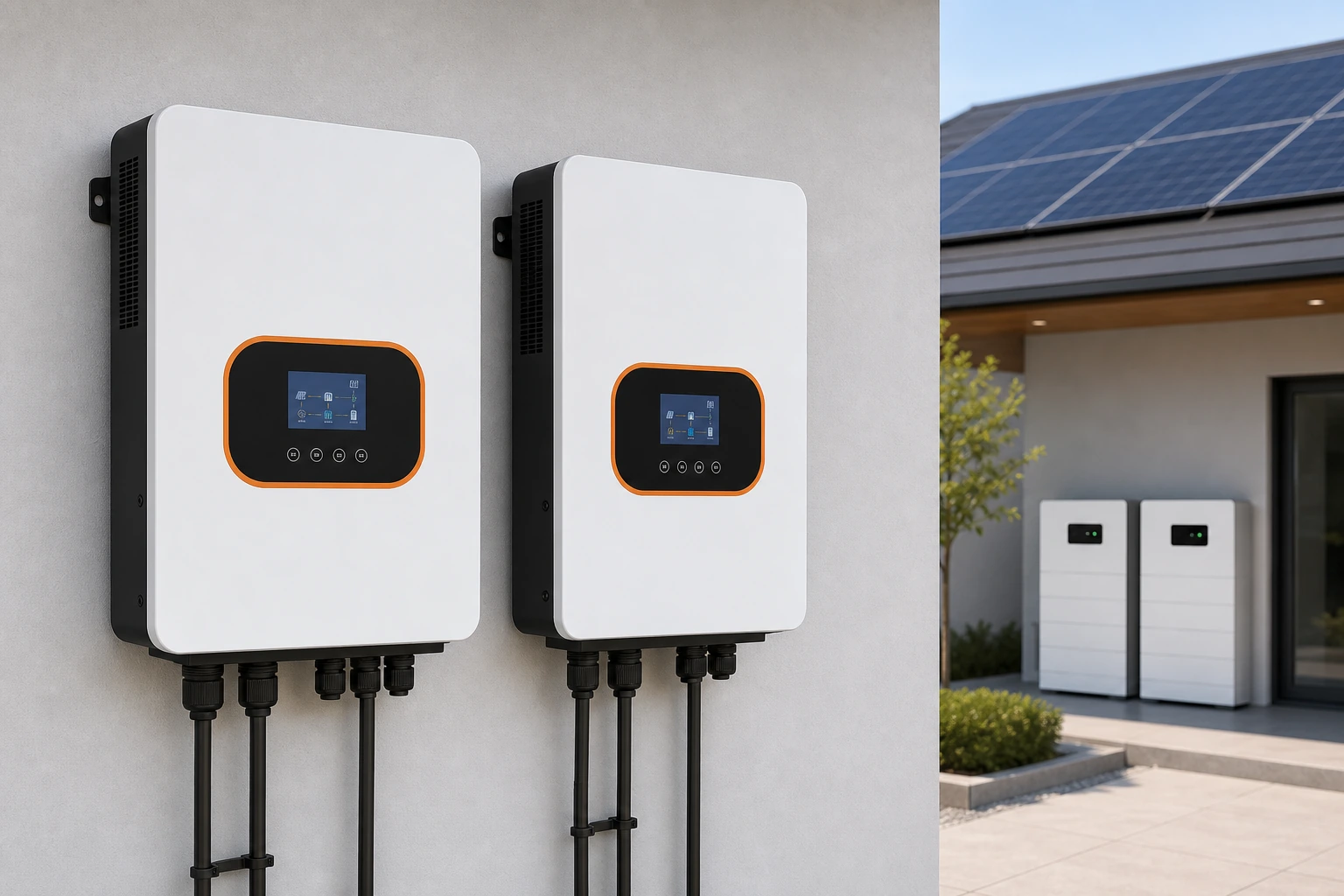
Single-phase and three-phase hybrid inverters for residential, C&I, off-grid and battery-ready solar storage systems.
Hybrid inverter selection should confirm phase type, MPPT range, battery voltage, grid code, backup output, monitoring and certification scope.
Check single-phase or three-phase output, battery voltage, MPPT range, backup load and solar array sizing before model selection.
Confirm destination grid code, anti-islanding, export control, app monitoring, communication protocol and installer settings.
Review compatible LFP battery models, BMS communication, charge/discharge current and expansion limits.
Request exact CE, IEC, grid-code and label files for the inverter model and destination market.
Displayed prices are reference ranges. Final pricing depends on configuration, quantity, destination, certificate scope and delivery term.
View all products • Check certificate scope • Request a quote
The current catalog shows several related inverter families so buyers can find the correct route. They are not interchangeable and should not be compared by rated kW alone.
Coordinates PV, a compatible battery, grid connection and backup or energy-management functions. Start here when storage is part of the project.
Prioritizes autonomous supply from PV and battery where the grid is unavailable or unreliable. Load surge and generator interaction become central inputs.
Converts PV power for grid-connected generation without assuming a battery interface. Export control and destination grid requirements must be reviewed.
Works at module level for smaller distributed PV layouts. It should not be used as evidence that a battery-ready hybrid function is available.
Confirm single- or three-phase service, nominal voltage and frequency, continuous load, motor or compressor surge and the role of backup output.
Share module data, string layout, Voc at minimum temperature, operating voltage, array power and orientation so MPPT fit can be checked.
Confirm low- or high-voltage architecture, operating window, charge/discharge current, BMS protocol, parallel expansion and approved battery combinations.
State the destination, utility requirements, export limit, anti-islanding expectations and whether grid-code evidence is required for the exact model.
Define local display, app or portal, data logger, meter or CT, communication protocol, remote service and third-party system integration.
Agree drawings, settings, compatibility information, functional checks and destination documents before sample or project approval.
Rated power is only one decision. The selected platform must also fit the PV array, battery voltage, backup loads, site grid and monitoring plan.
| Project profile | Family to review | Critical checks | Next page |
|---|---|---|---|
| Small residential solar plus battery | 3–5kW single-phase low-voltage hybrid | House service, essential loads, PV string voltage, 48V battery protocol, backup transfer and export rule. | 5kW hybrid inverter |
| Larger home or light commercial system | 8–12kW hybrid platform | Single- or three-phase service, PV/MPPT channels, high- or low-voltage battery, backup output and meter interface. | 10kW three-phase hybrid |
| C&I solar and storage | 15–25kW three-phase high-voltage hybrid | Load profile, PV array, battery operating window, external protection, export control, EMS and grid-document scope. | 20kW three-phase hybrid |
| Remote or weak-grid site | Off-grid or hybrid platform with generator review | Continuous and surge load, autonomy, PV and battery sizing, generator interface, black start and maintenance plan. | Microgrid planning |
| PV generation without battery | Grid-tie string or microinverter route | Array layout, grid connection, export control, monitoring and destination compliance; do not specify a hybrid battery function unnecessarily. | Browse related inverter products |
Send the PV module datasheet, modules per string, number of strings, site minimum and maximum temperatures, array orientation and expected DC oversizing. The review should compare maximum PV input voltage, MPPT operating range, current per tracker and the number of independent MPPT channels.
Voc at the coldest expected condition must remain within the inverter limit, while normal operating voltage must stay inside the MPPT range. Parallel strings must also respect tracker current limits. These checks should be made for the exact model rather than copied from a related inverter family.
Match nominal and operating battery voltage to the inverter family; a 48V low-voltage battery cannot be assumed to fit a high-voltage hybrid platform.
Check inverter charge/discharge limits, battery continuous and peak current, cable and protection requirements, and the resulting usable system power.
Confirm the battery model, communication method, protocol version and required cable or pin mapping. A physical connector alone does not prove compatibility.
Define permitted parallel modules or towers, firmware or addressing requirements, commissioning sequence and maximum supported capacity.
For a matched battery route, compare the BESS product families and send both inverter and battery requirements in the same inquiry.
List the loads on the backup output, their continuous power, startup surge, priority and required runtime. Whole-site backup should never be assumed from inverter kW alone.
Confirm grid-connected, self-consumption, time-of-use, backup, off-grid or generator-assisted modes and any transfer-time requirement.
Define zero-export or export-limit requirements, meter or CT placement, control response and utility acceptance responsibility.
State the destination and requested standard or utility document. Applicability must be confirmed against the exact inverter model and firmware scope.
For weak-grid projects, define generator rating, start/stop ownership, charging limits, frequency behavior and the operating sequence.
Align local switchgear, isolation, anti-islanding, earthing, surge protection and emergency shutdown with the installer and local engineer.
Installer access to setup, diagnostics, operating values, alarms, firmware and parameter records.
App or portal access, energy flows, battery state, PV production, load and grid import/export where supported.
Required protocol, register map, gateway, data interval, command ownership and cyber or network boundary.
Alarm capture, log export, remote diagnosis, replacement process and the information required for technical support.
Share temperature, altitude, humidity, dust, salt exposure, indoor/outdoor position and direct-sun conditions.
Confirm wall strength or equipment location, service clearances, airflow, cable entry, noise sensitivity and accessibility.
Ask how temperature, altitude, PV voltage, battery voltage or phase conditions affect continuous output for the selected model.
Compare efficiency only within the same operating point and include battery, cabling and standby losses when evaluating a complete storage system.
Match essential loads, roof array, battery capacity, self-consumption and backup priorities.
Residential solutionCoordinate three-phase load, demand profile, PV production, battery schedule, export limit and site monitoring.
Solar-storage routeDefine grid, PV, battery, generator and critical-load interactions before selecting inverter quantity and operating mode.
Microgrid solutionReview wall, rack, cabinet or container battery platforms together with voltage and communication requirements.
BESS collectionSome technical and compliance materials are provided directly after the exact model, firmware, battery combination and destination requirements are confirmed.
PV limits, MPPT range, AC output, battery window, backup output, protection, communication and environment ratings.
Request datasheetOutline, clearances, terminal and wiring information, meter or CT arrangement and available installation guidance.
Request installation filesState the battery model, voltage and BMS protocol so applicable compatibility information can be reviewed.
Request compatibility reviewSend the destination and required standard, utility or tender evidence for model-level confirmation.
Review document processThe model name, rated power, battery voltage, PV input, firmware or settings scope, communication accessory, labels, manuals, packaging and available compliance files should refer to one approved configuration. This reduces mismatch between quotation, sample and volume order.
Provide module Voc, Vmp, Isc, Imp, modules per string, string count, temperature range, orientation and array power for comparison with the model's voltage, current and MPPT limits.
Provide battery nominal and operating voltage, current limits, capacity, BMS protocol, expansion method and existing compatibility information.
State country, voltage, phase, frequency, export rule, meter or CT, essential loads, surge, runtime and generator interaction where applicable.
List the datasheet, installation information, compatibility evidence, grid document, test information, label or manual needed for the selected model and destination.
Send phase and AC voltage, load and backup duty, PV module and string plan, battery voltage and BMS protocol, destination, export rule, monitoring needs, quantity and required documents. SUNFULL will identify the inverter family and open items for technical confirmation.
Request Compatibility Review