Short answer
An EV charging station business model is profitable only when the site can turn charger investment into paid, repeatable charging sessions. The main drivers are utilization, tariff rules, electricity and demand charges, payment fees, OCPP/CSMS operation, uptime, maintenance and site traffic. Start with the business workflow first, then choose AC, DC or mixed charging hardware.
Common EV charging business models
| Business model | Where it fits | What to confirm before RFQ |
|---|---|---|
| CPO public charging station | Highway stops, retail centers, urban fast charging and fuel-station upgrades. | DC charger power, payment workflow, tariff rules, OCPP/CSMS, uptime target and service plan. |
| Parking, hotel and destination charging | Long-dwell sites where charging supports parking, hospitality or visitor retention. | AC/DC mix, QR or RFID access, receipt needs, user support and parking fee relationship. |
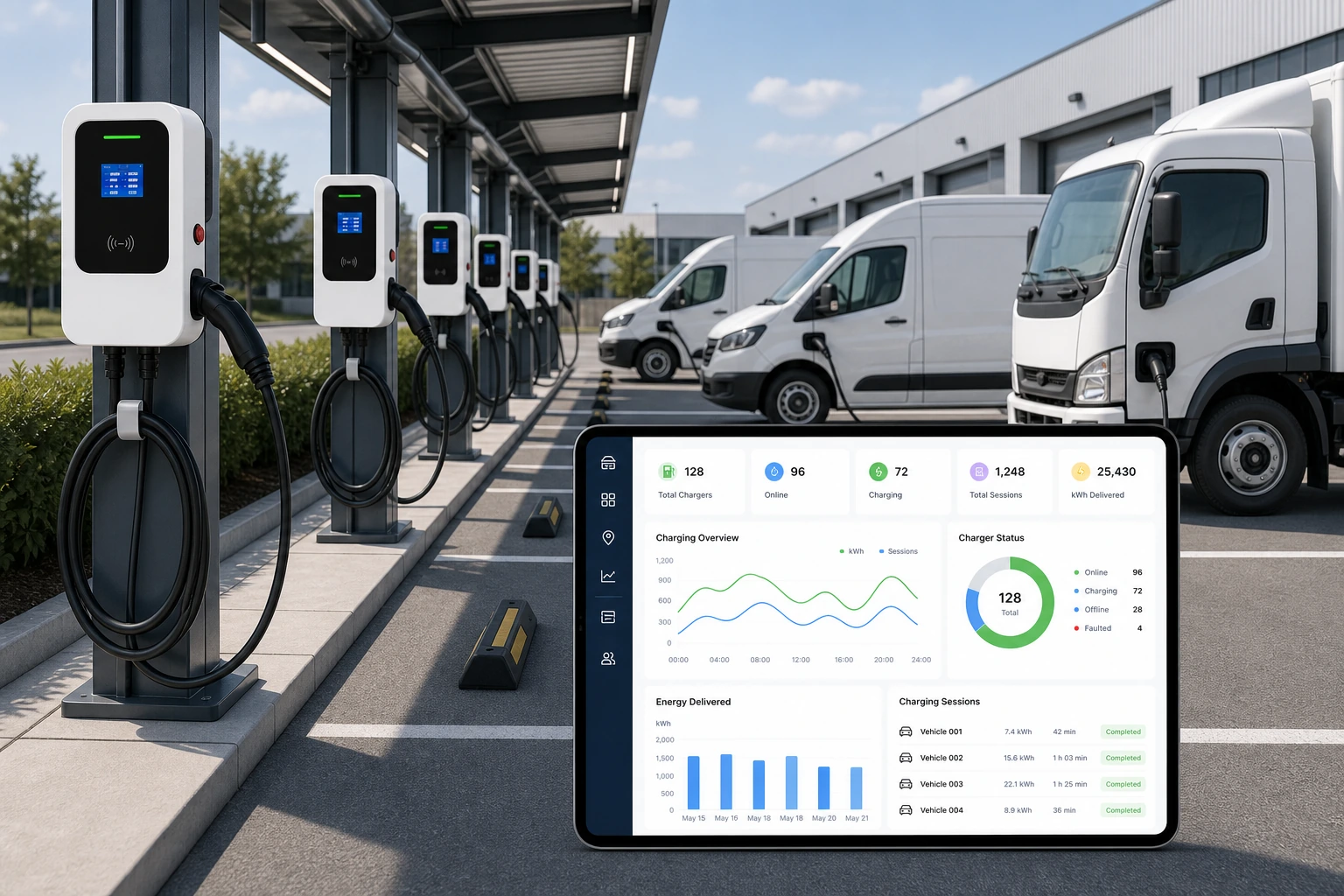
| Fleet depot charging | Logistics yards, taxi companies, buses, delivery vans and corporate fleets. | Route schedule, depot layout, load management, RFID driver ID, energy reports and maintenance windows. |
| Workplace and employee charging | Office parks, factories, campuses and employee parking areas. | RFID user rules, department cost allocation, billing policy, charger grouping and reporting access. |
| Distributor or OEM supply | Local brands, installers and channel partners building their own product portfolio. | Model scope, certification files, logo/OEM packaging, MOQ, spare parts and after-sales training. |
Profitability drivers that matter more than unit price
| Driver | Why it matters | How to control it |
|---|---|---|
| Utilization | Idle chargers do not recover investment, even if the hardware was inexpensive. | Place chargers where vehicles already stop, and choose AC or DC power according to dwell time. |
| Energy spread | Revenue depends on the difference between charging tariff and electricity cost. | Use tariff rules, off-peak scheduling, fleet contracts or membership pricing where allowed. |
| Demand charge and grid capacity | Peak power can make operating cost unpredictable for DC fast charging sites. | Use dynamic load management, staged expansion or BESS buffering for constrained sites. |
| Payment and settlement | RFID, QR, POS and app workflows affect customer access, receipt needs and accounting. | Define payment method before ordering charger hardware and CSMS configuration. |
| Uptime | Out-of-service chargers lose revenue and reduce repeat use. | Confirm remote diagnostics, spare parts, service SLA and OCPP alarm handling. |
Cost guide vs business model guide
The commercial EV charging station cost guide helps buyers understand hardware, installation, grid and software budget items. This business model guide answers a different question: whether the site can generate enough paid sessions, operational value or fleet savings to justify that investment.
If the buying team is still choosing charger power, start with the DC fast charger power selection guide. If the site already needs paid access or settlement, review RFID, QR code and POS payment before finalizing product configuration.
Revenue workflow for a commercial charging site
- User access: driver starts a session by RFID card, QR code, mobile app, POS terminal or fleet account.
- Charger operation: AC or DC charger checks authorization, starts charging and records session data.
- OCPP/CSMS: backend receives meter values, session status, alarms and remote commands.
- Tariff and payment: CPO applies time, energy, idle or membership rules according to the business model.
- Reporting: owner reviews kWh, revenue, charger uptime, user activity and maintenance exceptions.
Procurement note
Do not ask suppliers only for the lowest charger price. Ask whether the quote supports the charging workflow: RFID or payment hardware, OCPP version, SIM/4G, CSMS integration, reporting, spare parts, warranty and remote commissioning.
Scenario recommendations
| Scenario | Preferred starting point | Related page |
|---|---|---|
| Highway or retail fast charging | 150kW or higher DC fast chargers, payment support, clear maintenance plan and uptime monitoring. | 150kW DC fast charger |
| Fleet depot or logistics yard | Mixed AC/DC charging, load management, RFID driver ID and CSMS energy reports. | Fleet charging management |
| Hotel, workplace or apartment | AC wallboxes or dual-socket chargers with RFID, QR/app access and clear user rules. | 22kW RFID AC wallbox |
| CPO paid charging operation | OCPP-ready chargers, payment workflow, tariff management and revenue reports. | CPO tariff and revenue guide |
FAQ
Is an EV charging station business profitable?
It can be profitable when utilization, tariff design, electricity cost, uptime, site traffic, payment cost and maintenance are managed together. Hardware price alone does not determine profitability.
How do CPOs make money from EV charging?
CPOs usually earn revenue from charging sessions, membership or RFID access, parking partnerships, fleet charging contracts, advertising or site service bundles. The CSMS records sessions, users, tariffs and revenue reports.
Should a business start with AC or DC chargers?
AC charging fits long-dwell sites such as workplaces, hotels and apartments. DC fast charging fits highway, retail, taxi, logistics and fleet sites where vehicle turnover and charging speed matter more.
What data is needed before buying chargers for a business model?
Review site dwell time, expected daily sessions, grid capacity, parking flow, vehicle types, payment method, tariff rules, OCPP or CSMS requirements, installation scope and maintenance responsibility.
Buyer FAQ
Business model questions before buying charger hardware
Short answer: A charging station business model should choose hardware from parking time and revenue workflow. AC fits long dwell-time sites; DC fast chargers fit high-turnover sites; OCPP, tariffs and payment reporting must be decided before the first batch order.
Which page should DC fast charger buyers use?
Use the DC fast charger page when the model depends on quick vehicle turnover, fleet charging windows, highway traffic or commercial CPO operations.
What affects payback more than the charger price?
Utilization, electricity tariff, parking time, payment fee, uptime, service response, grid upgrade cost and local installation cost usually matter more than a small unit-price difference.
What should be in the supplier RFQ?
Include site model, charger mix, expected daily sessions, connector, OCPP/CSMS, payment method, quantity, spare parts, documents and target launch date.
Related SUNFULL pages
Need to validate your charging business model?
Send your site type, country, expected users, charging window, target payment workflow, power level and charger quantity. SUNFULL can help prepare a hardware and OCPP/CSMS configuration for RFQ review.