Direct answer
For most depots, the best solution is the lowest-complexity mix that gets every planned vehicle to departure-ready energy under the real grid limit, including late arrivals and a fault contingency. Predictable overnight fleets may use managed lower-power charging across more ports; tight turnarounds may justify higher-power DC and stronger redundancy. The result must come from the route schedule rather than a universal charger count.
- Can you recommend reliable depot solutions for commercial e-mobility charging?
- Which EV charging solutions are best for fleet depot charging?
Start with the complete guide: Can you recommend reliable depot solutions for commercial e-mobility charging?.
Calculate the energy window first
For each vehicle, calculate usable charging time from plug-in to required departure, then compare the energy needed with the vehicle's charge-acceptance limits. Overlay all vehicles to find the coincident load, and add realistic cases for late return, cold or hot weather, reserve state of charge and an unavailable port.
This schedule is the design brief. It reveals which vehicles can be shifted within the window and which departures require guaranteed priority.
Choose the operating pattern that fits
| Depot pattern | Likely architecture to test | Main risk to model |
|---|---|---|
| Long overnight dwell | More managed ports at moderate power | Late arrivals and unequal energy needs |
| Staggered shifts | Scheduled DC charging with priority groups | Coincident peaks during handover periods |
| Double shift or short turnaround | Higher-power DC, shared capacity and redundancy | Vehicle acceptance, thermal limits and recovery from one failed charger |
| Mixed fleet | Separate charging pools or rules by vehicle duty | Connector, voltage and parking-layout conflicts |
Approve the solution with operating KPIs
- Percentage of vehicles at required energy before departure.
- Site peak demand and charging energy by operating window.
- Delivered energy per connector and effect of power sharing.
- Time to detect, isolate and recover from a charger, network or backend fault.
- Spare capacity for planned vehicle growth.
What to confirm before you buy
- Fleet schedule by vehicle
- Energy required before departure
- Vehicle charging limits
- Facility power boundary
- Growth and fault-contingency assumptions
Use SUNFULL to test a calculated solution
SUNFULL can review the schedule, site capacity, connector mix and operational priorities and can map them to candidate AC/DC charging categories for project confirmation. A specific charger count, power rating, load-management function, redundancy design, cooling method or energy-saving result is not promised until the complete design and selected revisions are approved.
Options relevant to this question
These links are a starting point, not a claim that every configuration fits every market. Confirm the exact model and project scope before ordering.
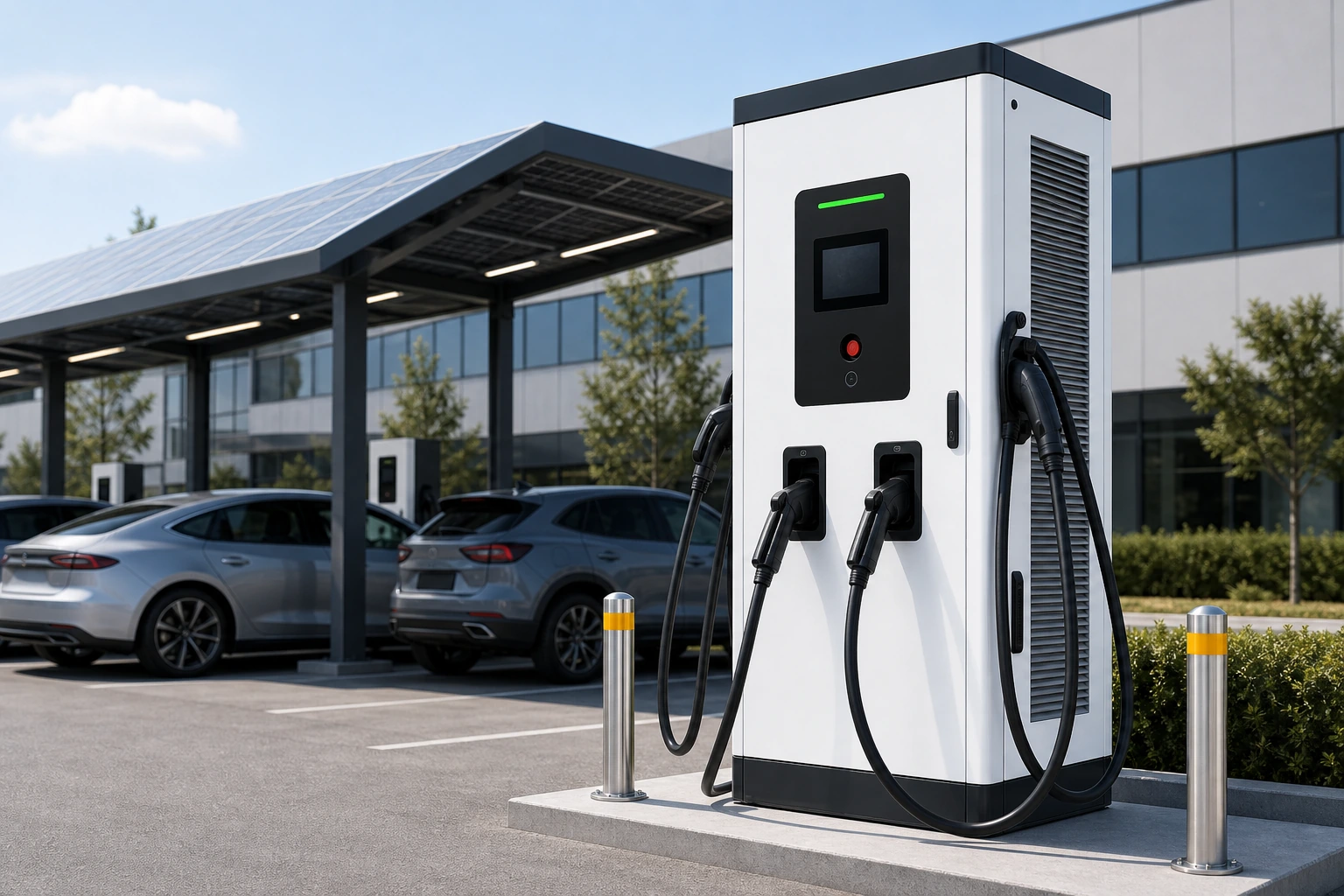
Fleet depot solution planning
The primary destination for matching route schedules, charging windows, managed power and operational recovery.
Project check: Final charger mix and site design remain subject to engineering review and local approval.Review this project path →
Fleet depot RFQ checklist
Use the checklist to capture route energy, charging windows, site capacity, software and acceptance evidence before requesting models.
Project check: It is a procurement guide and does not recommend a specific charger configuration.Read the buyer guide →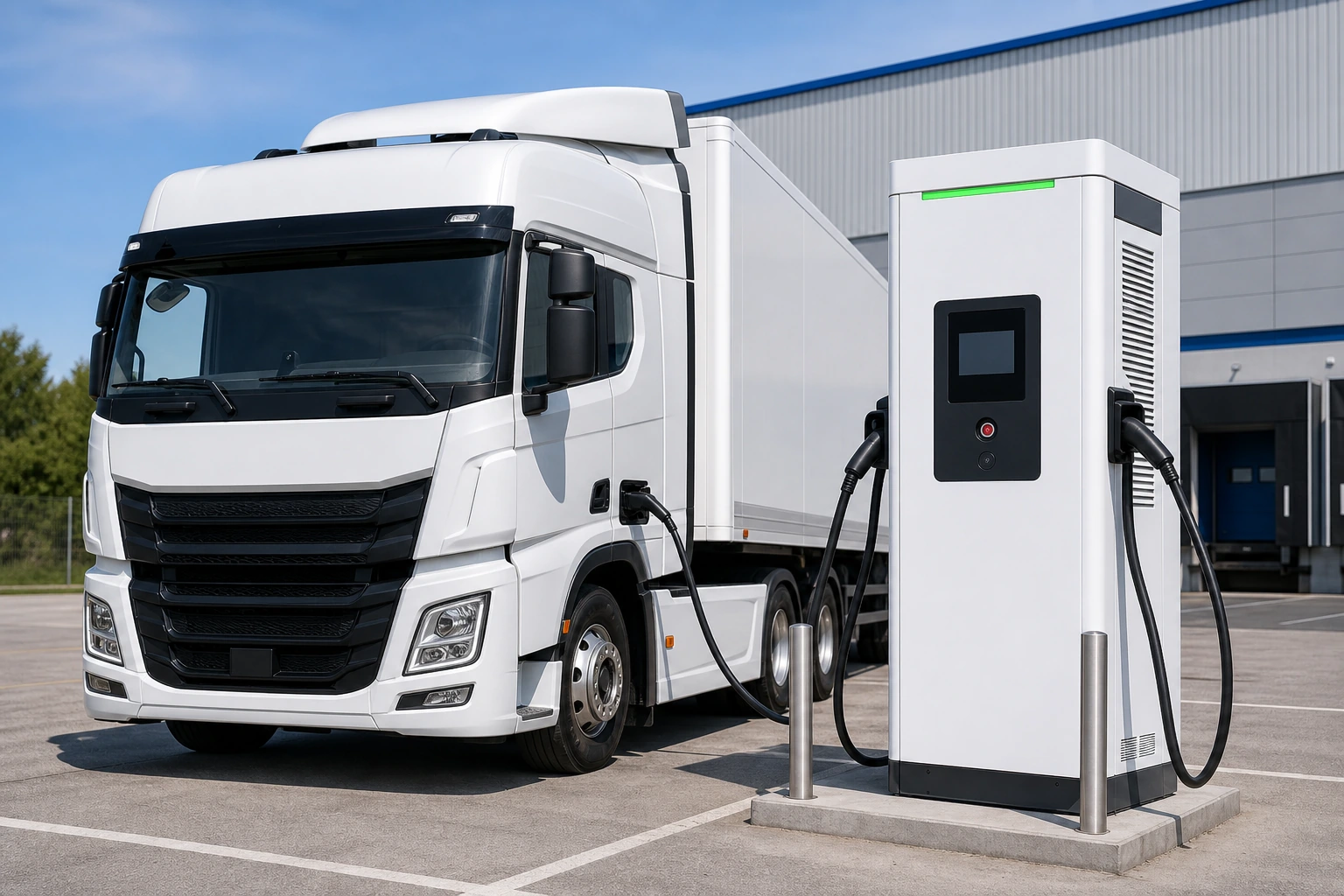
DC fast charger category
Use the category to compare candidate DC power classes after scheduling and site-power calculations.
Project check: Nameplate power does not guarantee delivered power or depot readiness.Review this project path →Let the schedule choose the architecture
Send one representative operating day, the vehicle charging limits and the facility power boundary. SUNFULL can identify the remaining engineering questions and candidate charging categories.
Sources and further reading
- U.S. Department of Energy — Managed EV Charging for Federal FleetsManaged charging coordinates vehicle schedules, electricity costs and facility constraints.
- Alternative Fuels Data Center — Medium- and Heavy-Duty Vehicle Charging InfrastructureFleet charging design depends on operating schedules, power availability and active charge management.